Multipolar space politcs
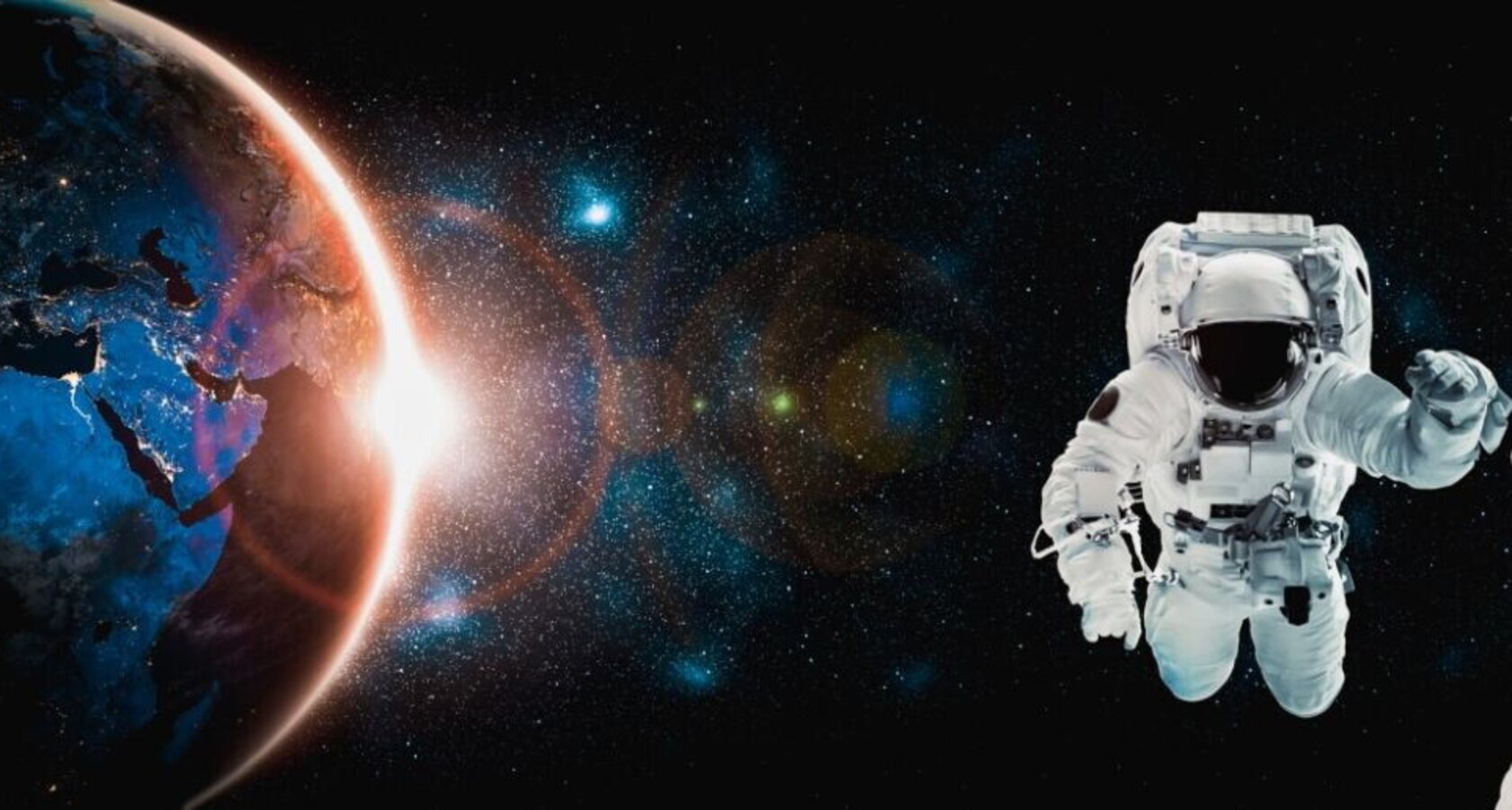
Over the next decade, flotillas of vehicles and robots in space could spark a new race for raw materials and raw power. The transition to a multipolar world extends into space
On May 14, 2025, China launched a cluster of 12 interconnected satellites into orbit, each outfitted with AI models featuring more than 8 billion parameters. Individually, these satellites can perform over 744 quadrillion operations per second (peta-ops). They serve as the foundational building blocks for a massive planned constellation of 2,800 satellites, which is projected to achieve a collective processing capacity of 1,000 peta-ops per second.
In December 2025, Elon Musk’s SpaceX and its Starlink subsidiary merged with his artificial intelligence company, xAI, to begin installing data centers in space. The militarization of AI is also leading to the increased militarization of space.
While this Chinese-US low Earth orbit race continues, India, Japan, Russia, the United Arab Emirates are developing Moon and Mars landing as well as robotic asteroid mining capabilities.
An epochal shift from a unipolar to a multipolar world is now extending into space, from low Earth orbit to Mars and beyond. This expansion of terrestrial geopolitics into space is driven by common goals: developing low Earth orbit and the Moon before reaching for Mars, the asteroid belts, and the resources of the ultimate hostile environment.
Low Earth orbit and the bipolar competition for energy
Low Earth orbit is emerging as the new arena for U.S.-China competition in the race for AI. According to the International Energy Agency, global electricity consumption by data centers reached 415 terawatt-hours in 2024, or 1.5 percent of the global total.
This figure follows five years of a 12 percent annual increase in power consumption driven by the rise of AI. If this growth rate continues, electricity usage will double every five years.
To meet this surge in demand, both China and the U.S. are beginning to construct data centers in space. This shift addresses the terrestrial energy constraints currently hindering their proliferation on Earth.
• Having made spaceflight profitable, SpaceX is considering developing specialized versions of its Starlink satellite constellations. Equipped with interconnected AI, these satellites could match the computing power of terrestrial data centers by utilizing Nvidia’s H100 semiconductors, powered by solar panels and cooled passively by the frigid temperatures of space.
• Deploying AI supercomputers and data centers in low Earth orbit establishes a third layer of AI infrastructure. This space-based layer joins the existing terrestrial and oceanic layers, which currently rely on fiber optic cables and the first generation of submerged data centers.
• On May 14, 2025, China launched 12 satellites into orbit, each equipped with AI models containing over 8 billion parameters. This constellation is dedicated to Earth observation, and China is opening it to international cooperation, particularly with countries in the Global South.
• The deployment of AI in orbit is inextricably linked to the current militarization of these technologies and of space itself. This strategic shift is taking shape through the "Golden Dome" program, a space defense initiative centered on an AI architecture of observation, early warning, and laser-equipped anti-missile satellites positioned in low Earth orbit from the U.S. to the Arctic.
• Dual-use AI and drone giants such as Palantir, Anduril, xAI-Grok, and OpenAI are also included in the Golden Dome program.
• The deployment of dual-use AI capabilities in low Earth orbit represents a new technological milestone, adapting the AI sector for space. This integration is now a central component of the lunar race between the United States, China, Japan, India, Russia, and the United Arab Emirates.
The new (multipolar) race to the Moon
On December 14, 2013, the Chang’e-3 mission lander achieved a soft landing on the Moon, deploying the Yutu rover a few hours later. Since then, the Chinese space program has taken on an increasingly industrial and geopolitical dimension, integrating technical and institutional cooperation with various Asian nations through bodies like the China-led Asia-Pacific Space Cooperation Organization.
On September 26, 2022, NASA intentionally crashed a spacecraft into the asteroid Dimorphos. The precision and force of the impact were so great that the collision carved a crater into the center of the asteroid while successfully altering its trajectory.
The civilian Artemis program, which aims to return astronauts to the lunar surface, has recently undergone a major overhaul. The staged Artemis II and III flights, scheduled for 2026 and 2027, will test new crewed mission capabilities ahead of the Artemis IV launch in 2028.
In 2023, India’s Chandrayaan-3 lander touched down near the lunar south pole, while a competing Russian mission failed in its final moments. By 2024, the Chinese Space Agency had landed a new rover in the same polar region as it prepares for a long-term presence on the Moon. In May 2024, China launched the Chang’e-6 mission, which deployed a rover to collect surface samples. These samples were successfully returned to Earth on June 25, 2024.
These missions precede Chang’e-7 and Chang’e-8, scheduled for 2026 and 2028, respectively. Both will explore the lunar south pole and the availability of local resources. They are instrumental in establishing the technical foundation for a permanent, inhabited robotic base—a project officially announced in 2021 and slated for completion around 2030.
Then, in March 2024, Russia unveiled plans to build a nuclear power plant between 2033 and 2035 to generate sufficient electricity for the International Lunar Research Station (ILRS). The project already involves Russia and numerous partners, including Venezuela, Belarus, Pakistan, Azerbaijan, South Africa, Egypt, Nicaragua, Thailand, Serbia, and Kazakhstan. Turkey has also applied to join.
It is no coincidence that all of these countries are part of the Chinese Belt & Road initiative.
The BRICS+ going to Mars and mining the asteroid belt
The primary driver of this multipolar race to the Moon is a pragmatic strategic goal: establishing a staging point for Mars and the asteroid belt to mine critical minerals. Building on the seminal work of Helene Lavoix, who first identified this trend, mining rare earth elements and other minerals is now vital to every facet of contemporary civilization.
Indeed, these minerals form the material foundation of the global energy transition—including the ongoing nuclear renaissance—as well as the exponential growth and militarization of AI. However, the relentless pressure on geological resources has placed current global development on a collision course with the “limits to growth.” Celestial bodies are becoming increasingly attractive due to their high concentrations of rare metals. Accessing, mining, and returning these deposits to Earth requires a significant reinforcement of robotics as a space-based dimension of artificial intelligence.
Indeed, lunar and asteroid landers and robotic miners will require high levels of autonomy. The race for space mining presents immense technological challenges and financial hurdles—and yet, it is already underway.
From a geopolitical perspective, the race for space mining is unfolding between two major blocs: the West on one side and the BRICS on the other.
The original BRICS group is composed of Brazil, Russia, India, China, and South Africa. Since 2024, the group has expanded to include the United Arab Emirates, which is currently preparing its 2028 Emirates Mission to the Asteroid Belt. This follows the success of its “Hope” robotic probe, which has been exploring Mars since 2021. The new mission aims to send a probe to fly by six asteroids in 2034 before entering orbit around a seventh, where a robotic lander is slated to touch down.
Space mining could become an industrial hub for asserting dominance through a new definition of the “high ground.” Indeed, since 1945 and the dawn of the missile and space race, Earth’s orbit and the Moon have been viewed by spacefaring nations as the ultimate frontier for strategic control.
Deploying fleets of spacecraft and robots over the next decade could trigger a new race for both raw materials and raw power. However, this shift also means that Earth’s multipolar geopolitics will extend into deep space, evolving into a new era of multipolar space politics. This global competition for resources in the stars will, in turn, have profound repercussions for geopolitics back on Earth.
A strange new world indeed.