
Key projects
Who governs space?
The system of governance for space resources is highly complex, involving international and private actors pursuing divergent goals. Yet peace in space must not be jeopardized
12 minThe potential exploitation of natural resources on the Moon and other celestial bodies has become one of the hottest topics in the space sector. The prospect of substantial profits, rapid technological progress, the impetus from private entities keen to invest, and geopolitical considerations have all pushed “space mining” to the center of the agenda for major global players.
From a legal standpoint, the use of space resources raises complex issues relating both to its legality under current international law and the intended purpose of such use. The underlying problem is that the 1967 Outer Space Treaty does not establish clear rules in this regard, giving rise to conflicting interpretations.
Given this ambiguity, some states—led by the United States—have undertaken initiatives at both national and regional levels to address this uncertainty. A key feature of these initiatives is the effort to legitimize the appropriation of space resources and to permit their use for both public and private profit. Clearly, actions of this kind not only create tension with existing international norms but also weaken the system of multilateral governance that has, until now, formed the basis for the management of space activities.
This leads to a critical consideration: the geopolitical significance of space mining. The first entities capable of utilizing space resources and constructing facilities on the Moon will possess an enormous strategic advantage over their rivals. It is therefore no surprise that some states are pushing for favorable regulations and that alliances are forming to secure a rapid return to the lunar surface.
A final factor worth highlighting is the role of the private sector. These companies do not merely aspire to be service providers; they play a significant role in influencing the regulatory process, actively lobbying for the adoption of rules that favor their commercial interests.
Space resources and key projects
The Moon and other celestial bodies are rich in minerals and substances that could be utilized both on-site and on Earth. In this context, water—found in significant quantities at the lunar poles as ice—is of particular importance. Beyond sustaining permanent lunar bases, it is a critical enabler for future missions to Mars or asteroids, as it can be converted into rocket propellant. Alongside water, helium-3 represents another vital resource; as one of the rarest isotopes on Earth, its potential use as a fuel in nuclear fusion reactors could revolutionize the generation of clean energy.
For more than a decade, private companies have expressed intense interest in utilizing space resources, investing substantial capital in the technologies required to extract and process them. While these private entities often operate with a degree of independence, their activities are inextricably linked to the lunar programs of major powers.
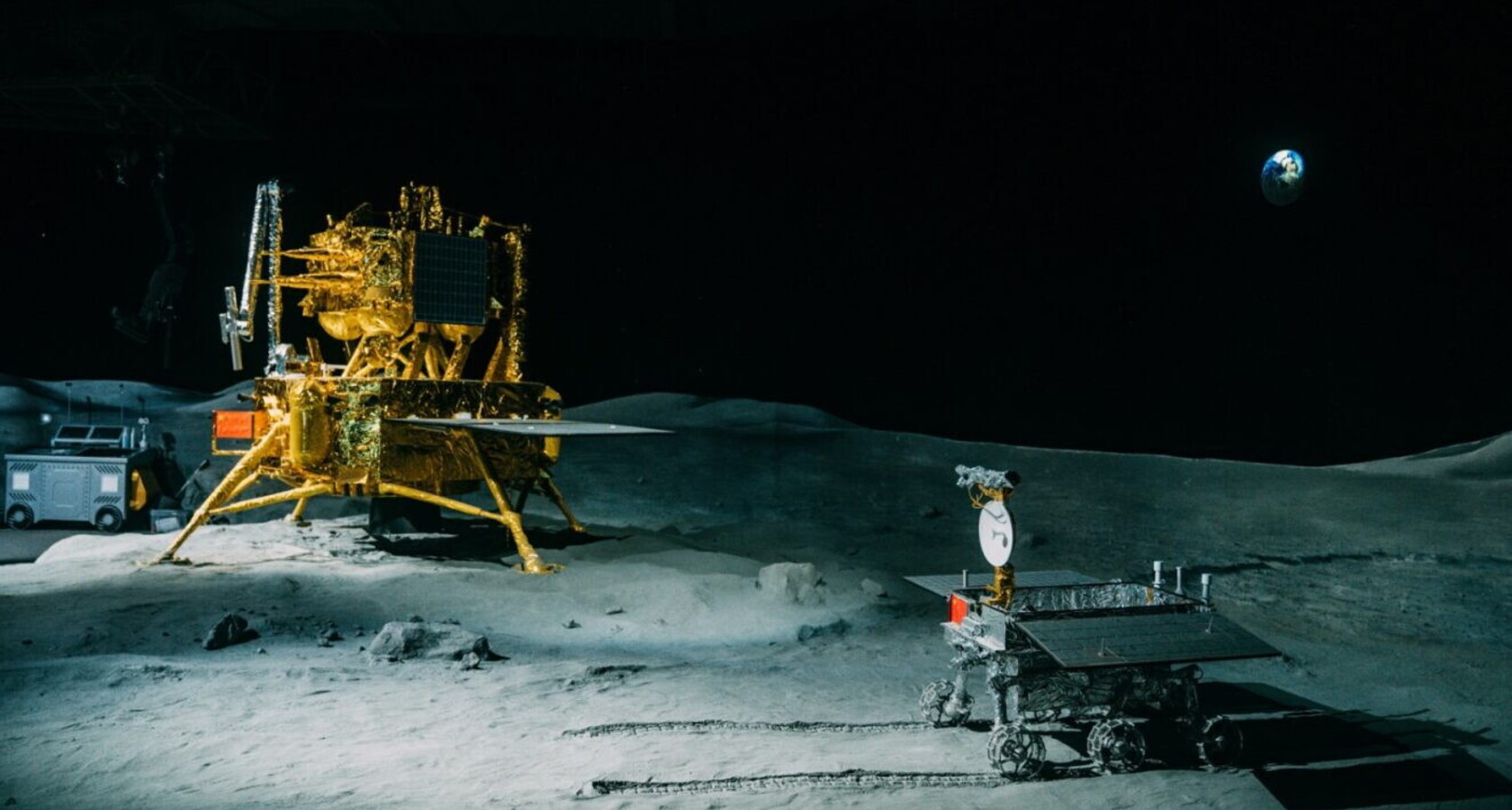
In 2017, the United States launched the Artemis Program, which aims to return humans to the lunar surface and establish a permanent presence. As of early 2026, approximately sixty countries have joined the Artemis Accords, aligning with the U.S.-led framework. Running parallel is China’s International Lunar Research Station (ILRS) project. This initiative aims to land Chinese astronauts by 2030 and establish a base at the lunar south pole to exploit resources for scientific and strategic purposes. Currently, the ILRS includes 17 member countries and over 50 international organizations and research institutes.
Questioni giuridiche e sviluppi normativi
The 1967 Outer Space Treaty prohibits the national appropriation of the Moon and other celestial bodies, while simultaneously recognizing the right of member states to explore and use outer space, particularly for scientific purposes. The Treaty adds that such exploration and use should be regarded as the “province of all mankind,” yet it fails to provide any specific details on the legal and practical obligations arising from this characterization. Crucially, the Treaty does not clarify whether the prohibition on appropriation extends to the resources contained within celestial bodies or whether such resources may be used for profit. This ambiguity has divided states and legal scholars between those who recognize the legality of commercial resource appropriation and those who consider it a violation of international law.
The 1979 Moon Agreement sought to address these open questions by conferring on lunar resources the status of “the common heritage of mankind” and proposing an international regime to authorize and manage exploitation. However, the Moon Agreement was rejected by the major spacefaring nations, meaning its provisions are not legally binding on the actors currently leading the return to the Moon.
In 2015, driven by private sector interests, the United States adopted a national law on the exploitation of space resources. This legislation not only declares the appropriation of space resources legal but also creates a framework for private operators to obtain authorization for space mining and commercial use. This U.S. law—which subsequently served as a model for similar legislation in Luxembourg, Japan, and the United Arab Emirates—has faced significant criticism from those who question the right of a single state to legislate nationally on a matter that remains unsettled under international treaties.
In 2020, the United States launched the Artemis Accords. These non-binding agreements contain a set of principles intended to guide participants in the Artemis Program. They reaffirm that resource appropriation is consistent with international law and introduce the possibility for states to establish "safety zones" on the Moon. The legality of these zones has been contested by commentators who argue they conflict with the non-appropriative nature of celestial bodies. Importantly, these Accords only apply to signatory states and have no effect on Russia or China. Unlike the United States, China has not published a specific legal document supporting its ILRS program, but it has clarified its position through statements to the United Nations. Beijing confirms the legality of using resources for scientific purposes but emphasizes that rules for space mining must be defined at the international, rather than national, level.
Currently, the fundamental rules governing outer space remain the product of discussions within the United Nations, specifically the Committee on the Peaceful Uses of Outer Space (COPUOS). Since 2022, a dedicated working group within this committee has been striving to finalize a set of principles for the management of space resource activities. While this is a welcome initiative, its success is far from guaranteed. COPUOS operates through a consensus procedure, meaning a single objection can block the approval of any document. Furthermore, even if adopted, these principles would be non-binding, leaving their implementation to the individual discretion of each state.

Governance and the geopolitical significance of space mining
The initiatives discussed in the previous section enable an analysis of the governance of space mining and its geopolitical implications. In this context, “governance” refers both to the legislative process of establishing regulations and to the management of lunar activities. It is important to emphasize that, in recent years, the space mining sector has witnessed a reversal of the traditional regulatory process. International negotiations within the United Nations have increasingly been replaced by unilateral and exclusive initiatives—both national and regional.
This shift has three primary consequences. The first is the diminished role of the United Nations. The effect of this decline is not only symbolic but also practical, as the UN provides a forum where every state can participate in the regulatory process. In a context where the United Nations plays a marginal role, the rules adopted inevitably reflect the interests of a few powerful nations at the expense of weaker ones. The second consequence is the creation of a dangerous precedent in the establishment of new rules. The choice to favor a unilateral approach could become a model for other nations eager to see rules adopted exclusively in their own favor, undermining the multilateral foundations of space law. The third consequence is legal uncertainty. In the absence of an international agreement, numerous issues relating to lunar activities remain unresolved, such as who has “priority” to extract resources if two operators target the same area, how to guarantee the rights of later entrants, and how to prevent appropriation while ensuring operational safety.
These considerations highlight the geopolitical gravity of space mining. In the absence of shared rules, there is a massive advantage to being “first.” Early operators will be positioned to dictate the rules of the game and structure a “lunar economy” to their advantage, both economically and strategically. It is conceivable that some states, citing safety as a justification, might restrict access to lunar areas and deploy security devices in orbit or on the surface, thereby jeopardizing the “peaceful” nature of the Moon. This explains the ongoing competition between the United States and China to be the first on the Moon and the risks this new space race poses to international security.
Future prospects
The future of space mining is difficult to predict, and much will depend on the choices made by nations in the coming years. What emerges from this analysis is that the governance system for space resources is exceptionally complex, involving international, national, and private actors pursuing largely divergent objectives. In this sense, the governance of space mining serves as a specialized “laboratory” where the international community’s ability to function will be tested. The goal is to structure a system capable of balancing economic returns with respect for the rights of all parties, the conservation of the lunar environment, and the promotion of international cooperation.
What must be avoided is jeopardizing the peaceful nature of space—a foundational factor that has enabled space to become the vital strategic, technological, and economic sector it is today. Maintaining this stability is not merely a legal preference, but a practical necessity for the continued growth of the global space economy.