Four representative cases
Integrated planning, best practice
From Mexico to Singapore, four concrete cases demonstrate how the integration of resources and infrastructure can strengthen local and regional resilience. The decisive factor is not technology but the ability to coordinate governance, finance and planning within a systemic approach
11 minWater, energy and food security are often discussed through separate institutions, investment channels and policy debates. Yet in many regions the pressures arrive together. Drought affects crops, hydropower and urban water supply. Energy prices shape the cost of pumping, treating and moving water. Food production depends on reliable water and energy supplies, while climate stress and supply-chain fragility turn local resource choices into matters of vulnerability.
This is why the Water-Energy-Food Nexus has become more than a conceptual framework. Its practical value lies in how it changes infrastructure decisions. Desalination, wastewater treatment, irrigation, waste management, renewable energy, controlled-environment agriculture and resource recovery may appear to belong to different sectors. In practice, they are part of the same questions: who receives water, how much energy is required, whether food production remains viable, who pays for resilience and who carries the risks when systems fail.
Integrated water-energy-food infrastructure should be understood as more than a physical combination of assets. The important issue is how resource functions are connected through design, finance, regulation, operation and ownership. A project may recover energy from wastewater, reuse treated water for agriculture, produce food with non-conventional water, or co-locate water and waste facilities to reduce energy demand. These arrangements matter because they can bring cross-sector costs, risks, benefits and possible co-benefits into the same planning frame, allowing a better outcome when a water-energy-food system is pursued. Technical integration gains practical value when institutions, incentives and financing are also brought into alignment.
Practical examples
Atotonilco de Tula in Mexico is a municipality hosting a large wastewater treatment plant that links urban sanitation, agricultural reuse and energy recovery. It treats a major share of wastewater from the Valley of Mexico and improves the quality of water reaching the Mezquital Valley, where wastewater has long been used for irrigation. Sludge digestion generates biogas that supplies a substantial share of the plant’s electricity needs, and treated water supports irrigation across an agricultural area of 80,000 to 90,000 hectares.
The financing is also a key part of the story. Atotonilco was developed through a large public-private partnership that brought together Mexico’s national infrastructure fund, private investors and commercial banks to implement the project. Its benefits are distributed across urban sanitation, agriculture, public health and energy recovery, while its delivery required a structure capable of carrying large capital and long-term operating responsibilities. The case illustrates the nexus in practice: several resource functions are handled through one infrastructure and financing arrangement.

The Braunschweig Model in Germany is a long-running circular infrastructure system that links municipal wastewater treatment, agricultural reuse and biogas energy production. Its operator describes it as a water-nutrient-energy cycle. Treated municipal wastewater is used to irrigate agricultural land, returning water and nutrients to production. Agricultural output includes food and energy crops, while biomass and sludge contribute to biogas generation for electricity and heat.
Its importance lies not in technological novelty, but in showing how integrated infrastructure can be sustained over time through stable relationships among utilities, farmers, regulators and energy users. A wastewater utility must meet treatment and environmental standards. Farmers need dependable access to water when crops require it, with quality and nutrient content that are reliable enough for field use. Energy recovery requires feedstock, processing capacity and a use or market for heat and electricity. Regulation must allow reuse while protecting health and the environment. Hundreds of farmers and thousands of residents benefit from the project. The model works because infrastructure, agriculture and energy recovery are organized as a continuing cycle, not as separate projects.

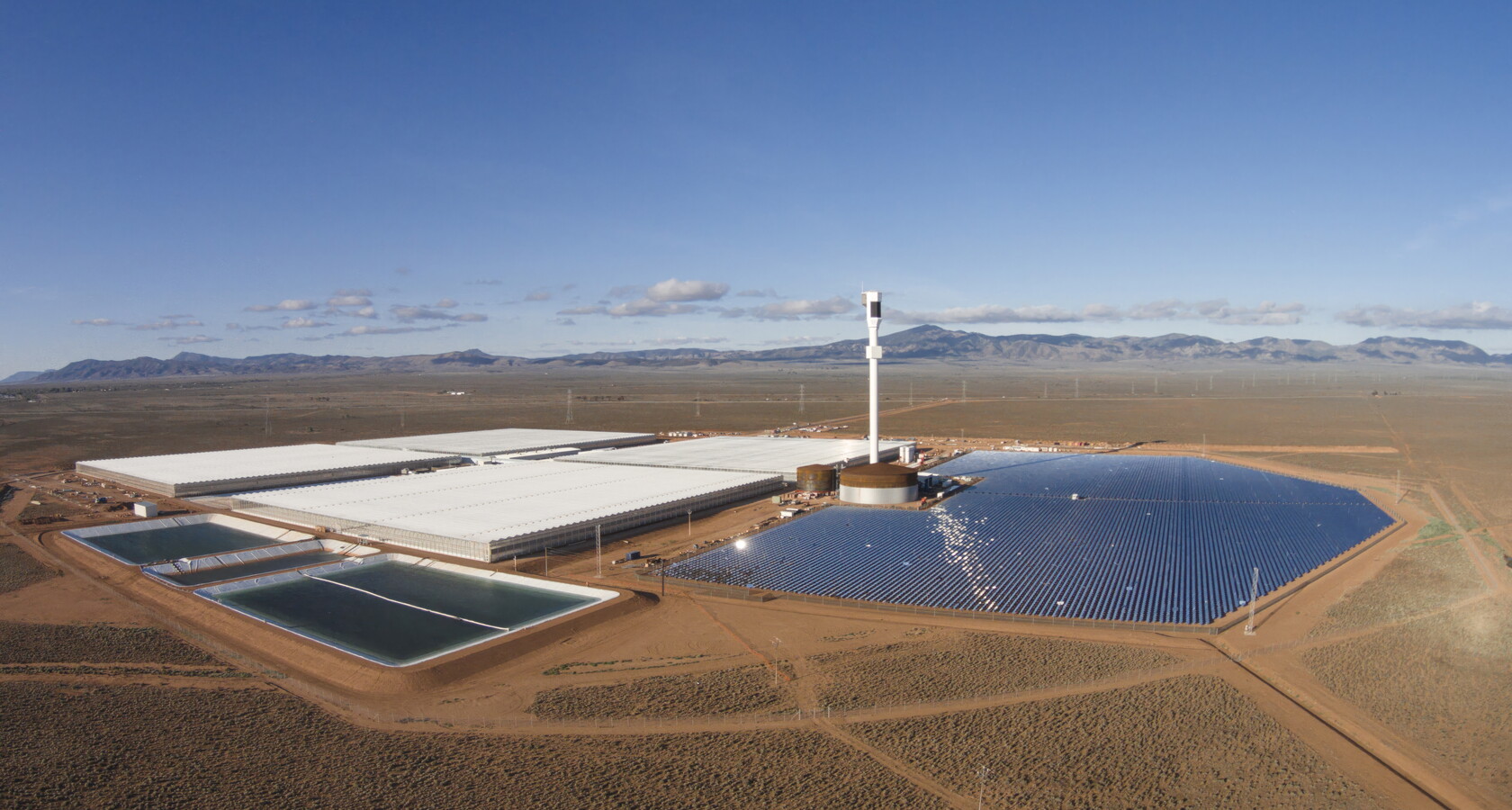
Sundrop Farms in Port Augusta, Australia, is a commercial greenhouse operation that links solar energy, seawater desalination and food production in an arid region. Its 20-hectare greenhouse uses concentrated solar thermal energy to support heating, cooling and desalination of seawater. The freshwater produced is used for controlled-environment crop production, supplying 10–15 percent of Australia’s truss tomato market. The case speaks directly to a core nexus challenge: how to produce food where conventional freshwater is limited and energy inputs are exposed to cost or supply pressures.
Its financing logic is different from a public utility or municipal infrastructure model. Sundrop depends on a commercial production model in which water and energy inputs are internal to the business case, and returns depend on reliable year-round production, market access and operational performance. The case shows that integrated infrastructure can widen options in arid regions, but only when the technical, financial, supply chain and market systems are aligned.
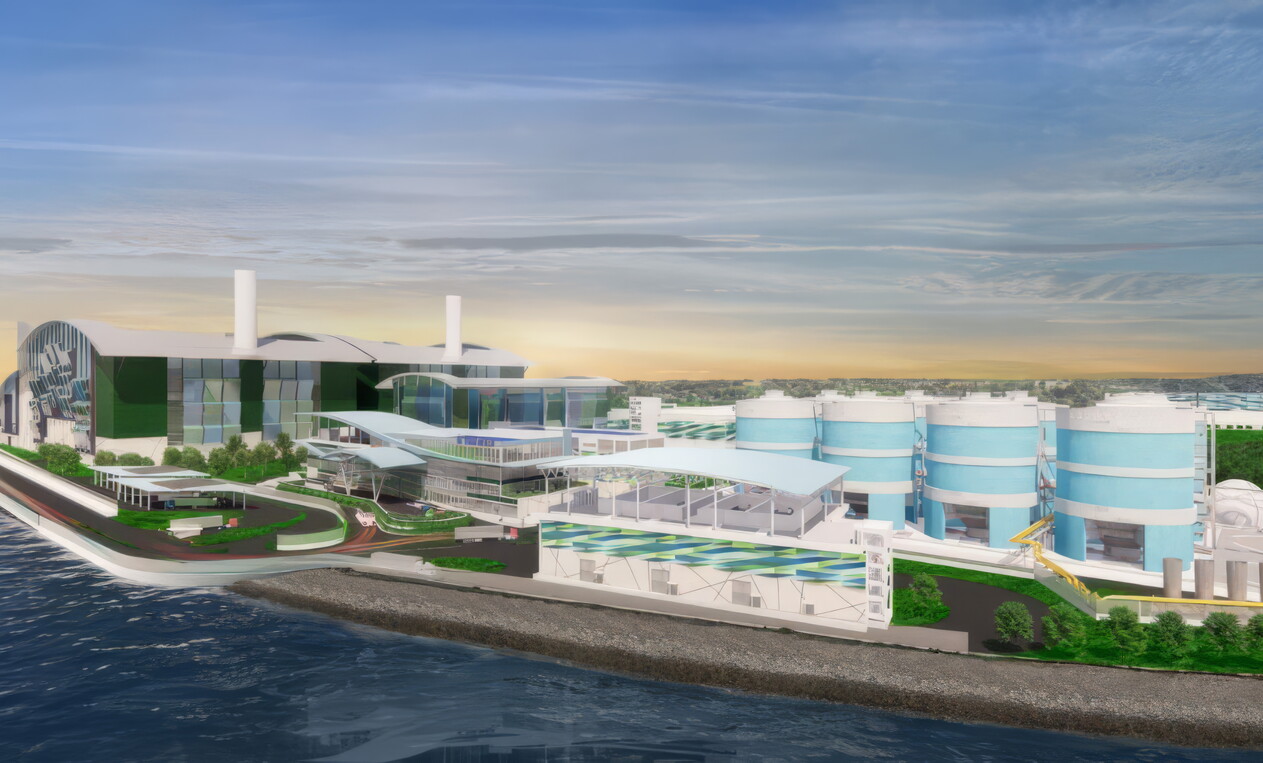
Singapore’s Tuas Nexus is a major integrated infrastructure project that co-locates water reclamation and solid-waste treatment. Its food-system link is indirect but relevant: source-segregated food waste, wastewater sludge and other waste streams are part of the integrated design for energy and resource recovery, providing valorization of approximately 400 tons of food waste per day, along with nutrient recovery, contributing to a circular food system. Singapore’s water agency and environment agency are developing the Tuas Water Reclamation Plant and Integrated Waste Management Facility together so that streams normally handled separately can be managed through a single circular infrastructure model.
The case shows integration at the level of public planning and institutional delivery. Singapore is designing water and waste facilities together from the outset, with resource recovery, energy self-sufficiency and co-location built into the model before commissioning. As a project under development, Tuas Nexus illustrates how integration can be embedded at the design stage of major public infrastructure.
The reasons for success
These four examples differ in scale, geography and institutional form: a public-private wastewater plant in Mexico, a long-running municipal-agricultural cycle in Germany, a commercial greenhouse operation in Australia, and a state-planned co-location project in Singapore. They also differ in how directly they connect to food systems. Atotonilco, Braunschweig and Sundrop are linked directly to agricultural or food production; Tuas Nexus connects more indirectly, through food waste and sludge streams within an urban circular-infrastructure model.
Across these cases, the success of technical integration is closely tied to the governance and finance that support the connected resource functions. Atotonilco links urban sanitation, agricultural reuse and energy recovery through a PPP structure. Braunschweig relies on long-term coordination among the wastewater association, farmers, regulators and energy users. Sundrop shows a commercial model in which water and energy inputs are built into controlled food production. Tuas Nexus shows how public planning can bring water reclamation and waste infrastructure together before operation begins.
These examples also show why financing integrated infrastructure is rarely straightforward. The costs and benefits do not always fall in the same place. A wastewater project may reduce public-health risks, support irrigation and generate energy, while requiring a financing structure able to carry capital costs and long-term operation. A circular utility model may create value through nutrients and biogas, but only if farmers, utilities and energy systems continue to interact predictably. A solar-desalinated greenhouse may reduce dependence on conventional freshwater and fossil-energy inputs, but its financial viability depends on reliable production and market access. Public infrastructure such as Tuas Nexus depends on state capacity, long planning horizons and institutional trust.
Governance is equally important. Integrated infrastructure crosses mandates. Water agencies, waste authorities, energy operators, farmers, municipalities, investors and regulators may each control part of the outcome. If they are not aligned, integration remains a design feature rather than an operating reality. Health standards, reuse rules, energy pricing, agricultural practices, tariff structures, land access, environmental safeguards and public acceptance all shape whether a project can continue beyond construction.
The lesson learned
Resource competition is often described in terms of rivers, aquifers, energy corridors, food imports or strategic minerals. Yet resilience also depends on whether countries and territories can reduce exposure to risks before a shock becomes a crisis. Integrated infrastructure can help by recovering value from waste streams, reducing pressure on freshwater, lowering dependence on external energy inputs, or maintaining food production under difficult conditions. It does not remove scarcity or competition, but it can give decision-makers more room to maneuver.
Transferability should be understood with care. Copying Atotonilco, Braunschweig, Sundrop or Tuas Nexus in another setting would miss the lesson. Integrated infrastructure depends on a particular combination of resource pressures, institutions, financing options, regulation, users and operating capacities, and that combination will rarely be identical elsewhere. What transfers is the way resource functions are organized: how a project starts from a concrete pressure, links water, energy and food-related functions, and creates arrangements for finance, regulation, operation and users to work together.
For future nexus-based infrastructure, the practical test is whether projects are designed to manage these relationships from the start. Pilots and flagship projects have value when they reveal what must be aligned: the resource flows, the institutions, the costs, the revenues, the risks and the users. Without that alignment, integrated infrastructure remains a technical demonstration. With it, infrastructure becomes a practical instrument for managing water, energy and food as one interconnected system.