Managing shocks and instability
The system no one governs
Water, energy, and food are all part of a single global system of interdependencies. It is here that one of the most critical geopolitical challenges of our time is being played out: the ability of states to manage climate shocks, shortages and systemic instability
9 minT
he defining geopolitical competition of our time is usually described in familiar terms: great powers, trade routes, semiconductors, military alliances. But this framing overlooks a more fundamental arena of contestation—one that does not lend itself to summits or treaties, yet quietly determines whether societies remain stable or fracture under pressure.
It is the system that binds water, energy, and food.
These are not three sectors. They are a single, tightly coupled system of interdependencies that modern governance persistently fails to treat as such. And that failure is becoming one of the most important drivers of instability in both democracies and autocracies.
The connections are straightforward, but their implications are not.
The triangle of dependencies
Energy needs water. Thermal power plants require vast quantities for cooling; hydropower depends on river flows; extracting oil and gas can affect the availability and quality of water. Even renewables, often presented as detached from natural constraints, rely on water throughout their lifecycle—from manufacturing to maintenance.
Water, in turn, needs energy. It must be pumped, transported, treated, and often recycled. In many countries, water scarcity is less about absolute availability than about the energy required to make it usable. When energy becomes expensive or unreliable, water effectively becomes scarce—even where it physically exists.
Food sits at the center of this triangle. Agriculture consumes the majority of freshwater globally and depends heavily on energy inputs—from irrigation and fertilizers to storage and transport. At the same time, decisions about energy—biofuels, solar installations, land use—feed back into food production and prices.
This is not a set of links. It is a system. And like all tightly coupled systems, it fails not gradually but abruptly.

When shocks become crises
A drought does not remain a drought. It reduces water availability, cuts hydropower output, raises electricity prices, and restricts irrigation. Crop yields fall, food prices rise, and governments intervene—often through blunt instruments such as subsidies or export bans. These interventions distort markets, shift scarcity across borders, and amplify the original shock. What began as a climatic event becomes a political crisis.
We have seen these cascades before. What is new is their frequency, their scale, and their simultaneity.
Over the past five years alone, the scale of climate-linked disruption has become harder to ignore. In the United States, there were roughly 90 separate billion-dollar weather and climate disasters between 2018 and 2022—an average of about 18 per year. More recent data confirm the acceleration: 190 such disasters occurred in the decade ending in 2024, with costs rising sharply. A large share of these events is water-related—floods, storms, and droughts—reflecting the intensification of the hydrological cycle, while wildfires have become more frequent and destructive as rising temperatures dry out vegetation and extend fire seasons. Increasingly, these shocks arrive not in isolation but in clusters, compounding their economic and political effects.
Governments are organized for a world that no longer exists. Ministries of energy, agriculture, and water operate as separate bureaucratic silos, each optimizing for its own objectives, often at the expense of the others. International organizations mirror this fragmentation. The result is a structural inability to govern what is an integrated system.
This mismatch is no longer just inefficient. It is geopolitically consequential.
Technology, transition and new dependencies
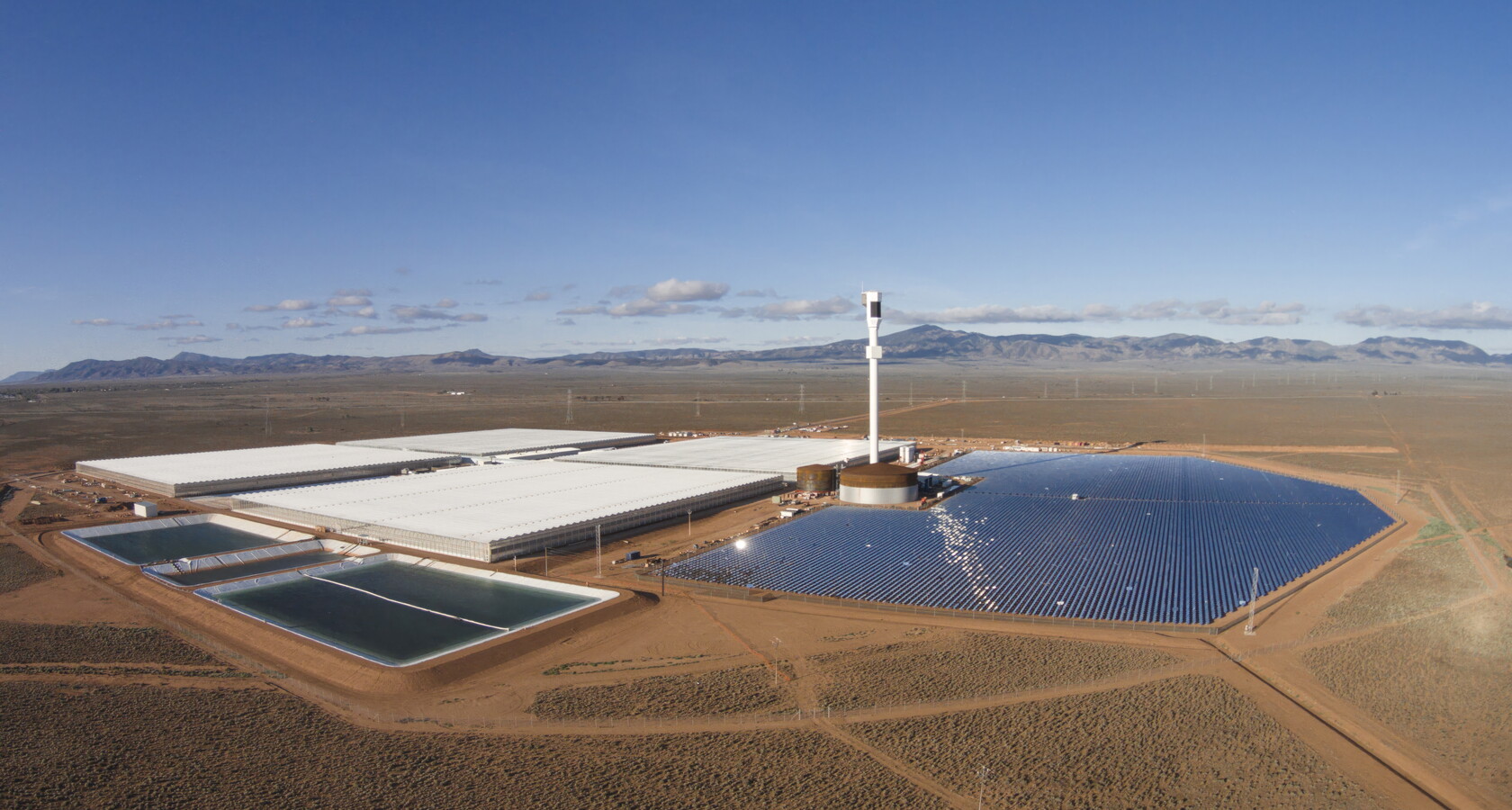
Take desalination. Once a technological curiosity, it has become a strategic necessity in water-scarce regions. But desalination is, at its core, a mechanism for converting energy into water. Its viability depends not only on technological efficiency but on the availability, price, and sustainability of energy. As countries seek to decarbonize, the question is no longer whether they can produce freshwater from seawater, but at what systemic cost—and with what new dependencies.
Or consider the shift toward less water-intensive energy sources. Solar and wind reduce operational water use, making them attractive in arid regions. However, they introduce other constraints: land use conflicts, intermittency, and reliance on materials with their own geopolitical supply chains. Solving one dimension of the problem often displaces pressure onto another.
Agriculture is undergoing a similar transformation. Precision irrigation, drought-resistant crops, and controlled-environment farming promise to reduce water intensity and increase resilience. But these solutions are energy-intensive and capital-heavy. They privilege countries with technological capacity and financial resources, potentially widening disparities in food production and access.
The laboratory of the Middle East
Nowhere are these tensions more acute than in the Middle East and North Africa. This is a region where water scarcity is structural, population growth is rapid, and energy systems are in transition. Here, the water–energy–food nexus is not an analytical framework. It is a daily constraint on political survival.
The Gulf states have responded by investing heavily in desalination and importing food at scale. This strategy has delivered stability, but it rests on a fragile equilibrium: abundant energy revenues, functioning global supply chains, and manageable climate conditions. Disrupt any one of these, and the model becomes more precarious.
Elsewhere, the challenges are more immediate. Egypt’s dependence on the Nile exposes it to upstream decisions beyond its control, turning water management into a question of diplomacy as much as engineering. Across North Africa, groundwater depletion, inefficient irrigation, and distorted pricing systems accelerate resource exhaustion while masking its true cost.
In such contexts, the failure to manage interdependence is not abstract. It translates into economic stress, social discontent, and, ultimately, political instability.

Governing complexity
What, then, does it mean to govern this system?
First, it requires abandoning the illusion that sectoral optimization can produce systemic stability. It cannot. Policies designed in isolation will continue to generate unintended consequences elsewhere in the system.
Second, it requires confronting the politics of pricing. Water and energy are often subsidized in ways that encourage overuse and delay necessary adjustments. Reforming these subsidies is politically risky, but avoiding reform is systemically dangerous. The challenge is not simply to raise prices, but to redesign them so that they reflect the scarcity of resources, while protecting vulnerable populations through targeted mechanisms rather than indiscriminate subsidies.
Third, it demands a more disciplined approach to technology. Desalination, renewables, and advanced agriculture are essential tools, but they are not solutions in themselves. Their deployment must be guided by an understanding of system-wide trade-offs, not by technological enthusiasm or political symbolism.
Fourth, it calls for a level of regional cooperation that has historically been elusive. Water basins, energy grids, and food supply chains cross borders, but governance rarely does. Without mechanisms for coordination, national strategies will continue to collide, often to mutual detriment.
Finally, and perhaps most importantly, it requires a shift in how we think about security. The traditional focus on territory and military capability is increasingly insufficient. The real vulnerabilities lie in the systems—complex, interdependent, and difficult to manage. Resilience, in this context, becomes the central objective: the capacity to absorb shocks without escalating into a widespread crisis.
The water–energy–food nexus forces a recognition that is both obvious and uncomfortable. The resources that sustain life are now entangled in ways that outstrip the institutions designed to manage them.
The question is no longer whether these interdependencies matter. It is whether governments can learn to govern them—before the system’s failures become the defining crises of our time.