

Diplomacy at work
COP of truth
In 2025, climate diplomacy faced one of its most difficult moments, marked by global instability and downsized ambitions. The Belém Conference chose the path of continuity and implementation
16 minH
ow was 2025 for the environment? Not a year entirely focused on COP30 in Belém, Brazil, but certainly one marked by that conference. Especially after the announcement—which came soon after Trump’s inauguration in January 2025—of the US withdrawal from participation in COPs.
It should be remembered, however, that Washington has not exited the United Nations Framework Convention on Climate Change: partly because accession was ratified by Congress and therefore requires more than a presidential order to change it, even though Trump can currently count on a majority in both the House and the Senate; and partly because, in the US mosaic, many states—benefiting from considerable budgets independent of federal budgets—remain at the global forefront of environmental policies and the energy transition. Lastly, because Trump remains essentially a pragmatist: he knows that the dual push for transition—digital and energy—in the United States involves companies with billion-dollar turnovers committed—by conviction or convenience—to environmental goals.
The result, then, was a year of ups and downs, spent waiting for the COP30 that Lula declared, in high tones, would be the “COP of truth.” A conference conducted under the banner of realism by Brazil’s experienced negotiator, André Corrêa do Lago, well aware that when you cannot prevail at the negotiating table, the real victory is to keep talks open and alive. And that is exactly what happened in Belém with the final documents, as we will see.
Environment 2025: the facts
2025 confirmed the acceleration of climate impacts on a global scale. Once again, the year was marked by a significant number of extreme events: forest fires in Los Angeles, which broke out in the dead of winter, show how changing weather conditions are changing the seasonality of hazards. During the summer, Europe experienced its usual fire season in Greece (Crete, Peloponnese, Attica), Albania, and Cyprus (Limassol area). This was compounded by several heat waves: as many as 96 European regions—mostly in France, Spain, and Italy—were affected, and 195 experienced drought conditions with significant impacts on agriculture and water availability.
Glacier retreat remains a worrisome phenomenon, evident both in Asia and especially in Europe, in the French, Italian and Swiss Alps. In Switzerland, the collapse of the Birch Glacier, which almost completely buried the village of Blatten, was one of the most serious incidents attributable to the increasing instability of glacial fronts.
Extreme weather events also carry a significant economic cost. The United Nations Office for Disaster Risk Reduction (UNDRR) reminds us how these phenomena affect not only population and mortality, but also the gap between insured and uninsured losses, especially in low-income countries. In the first six months of 2025, 91 percent of recorded disasters were weather or climate related. According to the UNDRR, total economic losses in developing countries exceeded USD 50 billion in the first half of the year alone, with nearly 95 percent of the losses not covered by insurance and falling directly on governments and citizens. Hydro-meteorological disasters—floods, droughts and storms—have affected over 45 million people worldwide.
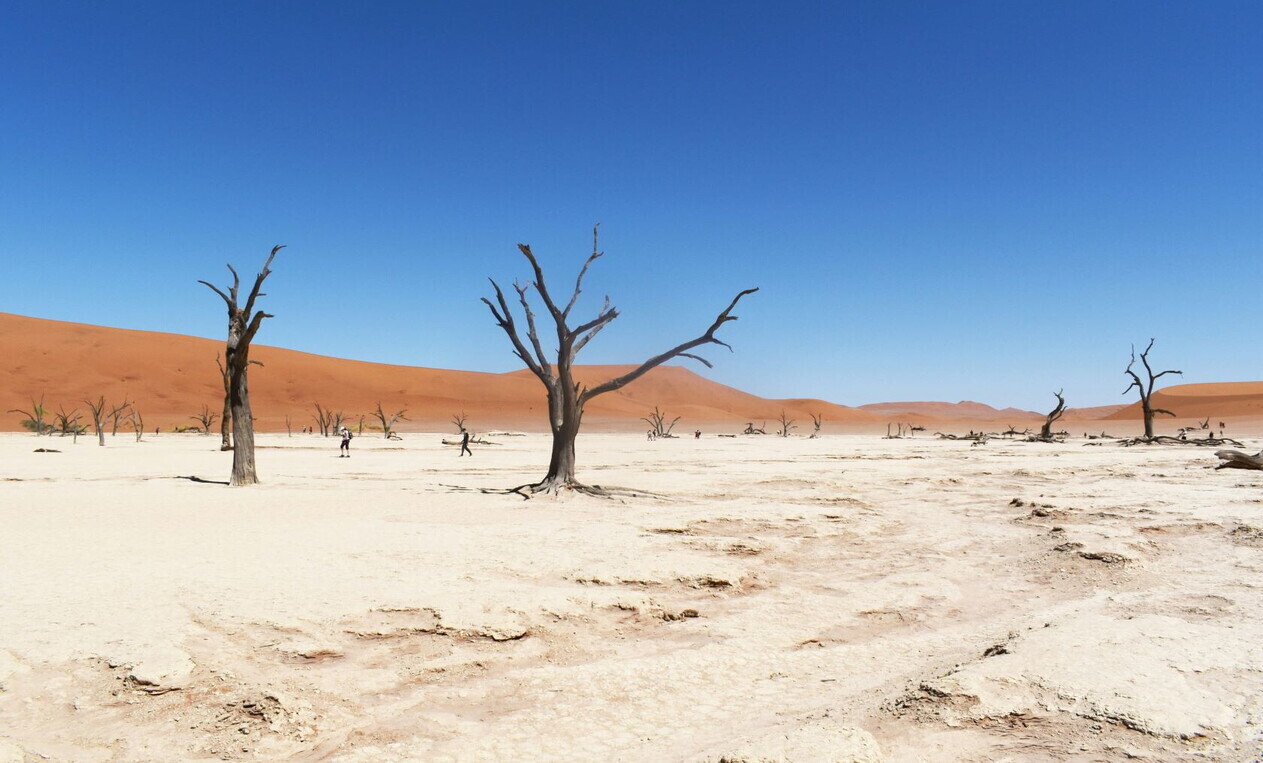
Large global reinsurers, such as Munich Re and Swiss Re, which systematically monitor climate risks, estimate total losses to be between USD 125 billion and USD 131 billion.
The Lancet Countdown Report 2025 highlights the health effects of these phenomena. Exposure to heat waves has led to an increase in deaths: an estimated 546,000 excess deaths per year between 2012 and 2021 related to heat stress. Lost productivity is another critical factor: in 2024, the hottest year on record, 639 billion work hours were lost due to heat stress. Finally, food security: extreme drought has affected 61 percent of the world’s landmass, generating food insecurity for over 120 million people more than in 1990.
Diplomacy and climate policies: the EU
The run-up to COP30 in Belém, 2025 was marked by intense diplomatic and legislative activity in many countries. The UN conference on plastics, held in Geneva in August, did not produce the expected binding agreement, postponing the drafting of a common document to a more favorable moment.
In Europe, however, the Green Deal debate has continued vigorously
The European Commission proposed an amendment to the EU Climate Regulation 2021, introducing an interim target: a 90 percent reduction in emissions by 2040 compared to 1990 levels. This ambitious proposal is accompanied, however, by a series of amendments aimed at modulating timeframes and percentages regarding the use of fossil fuels and coal, as well as the introduction of mandatory standards. Pressure from national governments and the European Parliament has in fact led to some adjustments—such as 5 percent flexibility margins to protect specific energy sectors of the 27.
However, the EU’s trajectory remains clear and keeps Europe firmly among the global leaders in the energy and environmental transition. But 2025 was also the year in which we came close to a new “tariff war” with the Trump administration—a context that inevitably pushes Brussels to calibrate climate ambition and geopolitical realism more carefully.
The United States: a country that is far from monolithic
While the Trump administration’s position is well-known and in continuity with the first term, the United States is by no means a “stone guest” in global negotiations. Even in Belém—though unofficially—the US presented a picture of overall improvement on the environmental front. The last Nationally Determined Contribution (NDC), drafted and filed in December 2024 by the Biden administration, set an ambitious goal: to reduce net greenhouse gas emissions by 61-66 percent below 2005 levels by 2035, in line with the trajectory toward climate neutrality in 2050 and the 1.5 °C limit. The plan also called for a methane cut of at least 35 percent by 2035, one of the fastest measures to reduce warming in the short term.
With Donald Trump’s return to the White House in 2025, these NDCs for 2030 and 2035 were revoked. However, the scientific assessments published by NASA, NOAA, the EPA and the IPCC outline a complex picture: significant risks and impacts already under way, yet with marked differences from state to state.
A country divided by climate impacts
The United States continues to be affected by extreme weather events costing tens or hundreds of billions of dollars annually. In 2024 alone, there were at least 18 disaster events—including droughts, hurricanes, and frost storms—totaling more than USD 165 billion in damage.
Heat waves are increasing in frequency and intensity, especially in the Southwest (Arizona, Texas), affecting public health and infrastructure. In Alaska and the Arctic, warming has been advancing at more than twice the rate of the rest of the country for the past 60 years or so, accelerating the melting of permafrost and sea ice and putting local communities and infrastructure under strain.
The impacts are highly differentiated regionally:
• Coasts and the Northeast: sea level rise and 70 percent increase in heavy rainfall;
• Southwest (California, Arizona): prolonged droughts, sharply increasing fire risk;
• Southeast and Caribbean belt: more intense hurricanes, storm surges, risk of saline intrusion into groundwater—as in Florida.
With such uneven impacts, it is precisely the states that play a decisive role. Many—especially California and New York, along with several large cities—continue to pursue ambitious environmental policies, in several cases exceeding the targets of Biden’s federal NDCs. California, led by Gavin Newsom, remains at the forefront, in open contrast with the federal line. A case in point is the issue of the “California Waiver”, the Clean Air Act exemption that allows the state to set stricter environmental standards. Its revocation, approved by the Republican-majority Senate, will open a high-profile constitutional dispute between Sacramento and Washington.
Market and economy: the silent force of transition
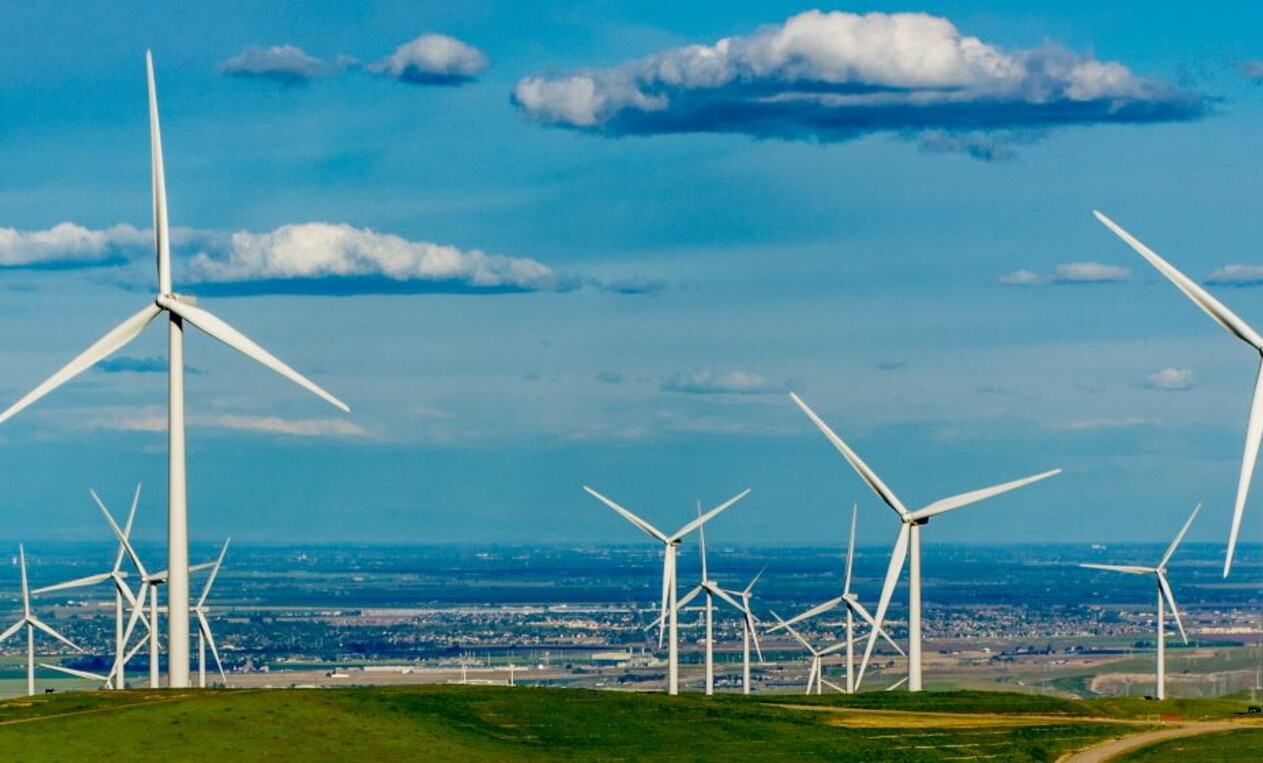
Beyond the political framework, the US industrial and financial structure remains strongly committed to the energy transition.
• Automotive: Ford and General Motors have announced multi-year plans to phase out endothermic engines and invest billions in batteries and electric vehicles.
• Big Tech: Google, Microsoft and Amazon are among the largest global buyers of renewable energy through long-term PPAs to power data centers.
• Utilities: NextEra Energy, now the largest US utility by capitalization, is a leader in wind and solar; Duke Energy and Exelon aim for total decarbonization by 2050.
• Finance: the giants BlackRock, State Street, and Vanguard—whatever judgment you may reserve for ESG criteria—still push companies toward reducing emissions.
To all this we can also add a not insignificant political element: employment. The green economy workforce is now a weighty and organized reality. The renewable energy sector employs more than 3 million workers, while the energy efficiency sector alone has 2.2 million. The “new green economy” is creating skilled jobs in Southern and Midwestern states—areas traditionally scarred by the deindustrialization of the last century.
This fact certainly does not escape Donald Trump on the eve of the year leading up to the midterm elections.
The uphill road to COP30
Il 2025, segnato da catastrofi naturali, negoziati internazionali altalenanti e dalle posizioni divergenti di Europa, Cina, BRICS e soprattutto degli Stati Uniti di Trump, lasciava presagire una COP30 dall’esito incerto. A Belém, il diplomatico incaricato ha lasciato a Lula il palcoscenico della riunione dei Capi di Stato di inizio novembre: una scena significativa, segnata dall’assenza dei leader di Stati Uniti, Cina e India, che insieme rappresentano oltre due miliardi di persone e una quota centrale delle emissioni globali.
Lula ha insistito su una COP di “verità”, più che di rinnovamento: è chiaro che non ci sono oggi le condizioni economiche e politiche che resero possibile l’accordo di Parigi dieci anni fa. Il mondo è più frammentato, più competitivo, più teso. Eppure, a Belém quella verità è stata detta, e non è poco.
COP30 focused negotiations on three major areas:
• a possible road map for phasing out fossil fuels;
• the comparison of national plans for implementing the Paris Agreement and financial support for the most vulnerable countries, including the Loss and Damage Fund;
• the relaunch of mitigation policies.
The final document, approved unanimously, is structured around three key themes: “Ten Years After Paris, United,” “From Negotiations to Implementation,” “Accelerating Implementation.”
Translated from diplomatic language: there was no agreement on a definitive road map for phasing out fossil fuels; instead, negotiators opted for continuity. The principles of the Paris Agreement and the conclusions of COP28 in Dubai were reaffirmed without hesitation.
In essence, the energy transition remains the shared path of no return. Each state, or regional entity—such as the European Union or the African Union—will take responsibility for its own choices, in a logic reminiscent of European “enhanced cooperation.” It is a structure that, after the four years of the Trump presidency, could once again involve the United States in the future.
From words to deeds
The most significant choice at Belém was the shift from negotiation to implementation. The Nationally Determined Contributions (NDCs), which according to the Paris Agreement were supposed to be delivered by February 2025, numbered just 30 at the start of the COP: they increased to 90 as the work progressed, but remain insufficient. Adding up the current contributions, the global trajectory would in fact lead to warming of 2.8 °C by the end of the century: better than the 4 °C considered likely before Paris, but still a long way from the 1.5 °C target.
That is why the message of the final document is clear: better to improve real performance than to keep chasing impossible deals with those who are unwilling to commit. Science points to one small but concrete window of hope that is worth keeping open.
On the financial front, the goal of tripling funds was not achieved, but still reached USD 120 billion annually to support developing countries. To this was added an initial USD 5 billion fund dedicated to protecting large tropical forests—the Amazon, Indonesia and others—along with confirmation of the Loss and Damage Fund, and a stronger commitment to involve private finance in land projects, including indigenous communities.
A sober yet vibrant COP
There are no winners. Yet, in the face of geopolitical tensions, economic slowdown, and division among major powers, COP30 produced a final document endorsed by all. It is a sign: climate diplomacy is neither stopping nor backtracking from Paris and Dubai, despite the complexity of the current moment.
It was also a COP that tones down certain media expectations: less of a “global mega-event”, and more pragmatic, technical, diplomatic, scientific and economic engagement. A “COP of truth”, as Lula requested: the truth of a world painted in black and white, marked by accelerations and setbacks, by enormous difficulties but also by irreversible industrial, technological and financial initiatives—initiatives that not even Trump, pragmatic when it comes to figures, jobs and innovation, can afford to ignore.
Perhaps it is a shrinking of the collective imagination, but not necessarily a negative development for future COPs. And the date is already set: Antalya, Turkey—COP31.