Interconnected challenges
North Africa and the middle east
A new Balance
A new Balance
The stability of the ceasefire in Gaza, Syria's ability to consolidate its transition, and the evolution of GCC-Western relations will shape the geopolitical landscape of the coming months. For Europe, the challenge is to translate the Pact for the Mediterranean into concrete results
11 minT
he Middle East is grappling with turbulent events, after a year of profound transitions for the region. In addition to the fragile truce in Gaza and the historic visit to the White House by Syria’s new President Ahmed al-Sharaa, with his impeccable attire and bushy beard, we have witnessed a partial political turning point in Northern Cyprus and new tensions in the Arabian Gulf.
As the year comes to an end, the picture reveals dynamics in flux: the traditional security architecture, founded on US power, is showing cracks, despite Washington’s attempts at reassurance; the European Union is attempting to relaunch itself with the Pact for the Mediterranean, a new form of cooperation with the southern shore that could also impact the development of the energy sector.
Social fragilities and regional threats
The ceasefire between Israel and Hamas, signed on October 9 in Sharm el-Sheikh with the mediation of Egypt, Turkey, Qatar, and the United States, was the most anticipated diplomatic event of the year. The Trump Administration’s strong commitment thus far appears to be a key element in its viability, such as it is. The twenty-point plan called for the end of military operations, the release of hostages, a partial withdrawal of Israel, and the renewed flow of humanitarian aid.
Though even this first phase faces daunting obstacles, the second will face even more complex issues: the political future of Hamas, economic reconstruction—estimated at no less than USD 50 billion—and the definition of a stable governance model for Gaza, which has so far struggled to gain Palestinian support, partly due to the absence of any institution with the legitimacy to govern Gaza. The entire process is conditioned by Israeli military control of the region, introducing a strong asymmetry between the actors; while persistent violence in the West Bank raises questions about the sustainability of the truce.
In the rest of the Middle East, developments appear more encouraging. In Cyprus, Tufan Erhürman’s victory in the presidential elections of the self-proclaimed Turkish Republic of Northern Cyprus, with 62 percent of the vote, marks a potential turning point for the island. The leader of the Turkish Republican Party has in fact reaffirmed his federalist vision and his desire to move closer to the European Union, distancing himself from the pro-Turkish nationalist stance of his predecessor, Ersin Tatar. Although a resolution to the Cyprus issue remains a long way off, in November, Erhürman did meet with Cypriot President Christodoulides and agreed to work together to restart the UN-led reunification process.
Moving east, in Syria, the post-Assad transition has entered a delicate phase. President Ahmed al-Sharaa’s visit to Washington was a historic milestone, as it is the first time in over eighty years that a Syrian leader has been received at the White House. A former Islamist commander, al-Sharaa now presents himself as a pragmatist and reformer—a sincere nationalist committed to securing the removal of sanctions and support for reconstruction. Reintegrating Syria into financial markets is essential for an economy devastated by thirteen years of war, which the World Bank estimates has caused damage exceeding USD 200 billion. The ceasefire with the Syrian Democratic Forces and the parliamentary elections in October have consolidated internal legitimacy, but the risk of destabilization remains high due to Turkish military presence in the north and Israeli incursions in the south.
Social fragilities and regional threats
2025 also saw the emergence of new forms of social protest in the Maghreb. In Tunisia, thousands of demonstrators protested against President Saied, accusing him of turning the country into a “prison.” Restrictions on expressing dissent, on press freedom, and the suspension of civil society organizations have prompted widespread condemnation. For Saied, this is a partly new dynamic.
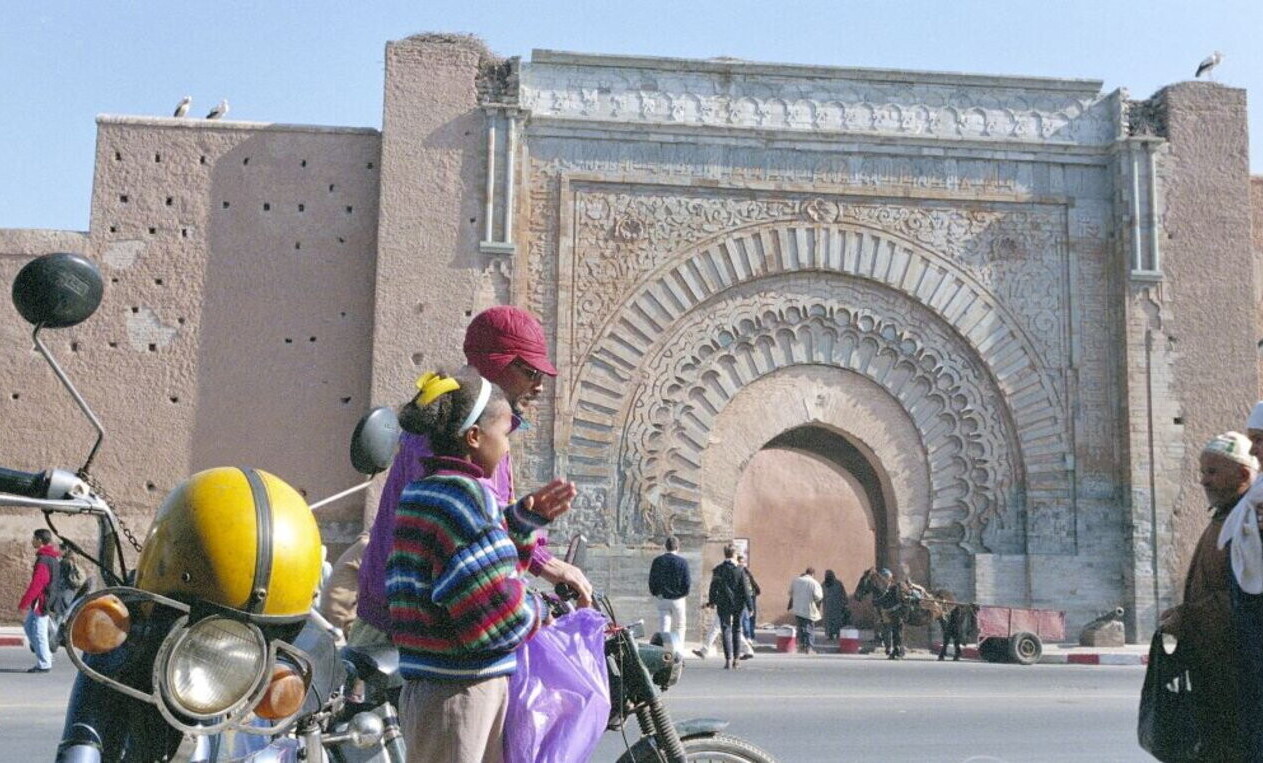
In Morocco, the Gen Z 212 movement has mobilized tens of thousands of young people in protests the likes of which hadn’t been seen since the Arab Spring. Organized through new social media platforms like Discord and TikTok, protesters called for structural reforms in healthcare and education, action to combat corruption, and job opportunities for a generation facing youth unemployment at 37 percent. The movement—decentralized and nonpartisan—is distinguished by its focus on socioeconomic issues. Both countries thus demonstrate that the renewal of the social contract between governments and citizens remains urgent and a common feature in the region—albeit often hidden.
The stability of the truce between Israel and Iran is perhaps the most uncertain feature on the Middle Eastern front. UN sanctions reimposed in September through the snapback mechanism limit Iran’s access to advanced missile and nuclear components, while Tehran has suspended cooperation with the IAEA. The Houthis have declared a halt to attacks in the Red Sea in conjunction with the ceasefire in Gaza, but the threat to maritime security cannot be declared over yet. It appears that Iran and its proxies are readjusting following Israeli maneuvers, trying to avoid giving Israel excuses for new attacks. At the same time, the strategy seems to be geared towards strengthening preparedness for a future conflict.
The major events of 2025 included the Israeli attack on Doha on September 9: another unprecedented shock to the regional security architecture, which threatened the ties between the United States and the Gulf monarchies. The operation—which targeted Hamas leaders during discussions on a ceasefire proposal—caused civilian casualties and represented Israel’s first direct attack on a Gulf Cooperation Council (GCC) member state. The episode amplified the crisis of confidence in the American security umbrella: although Qatar hosts the Al Udeid base and its status as a “major non-NATO ally,” Washington was not able to prevent the attack.
The GCC’s response was one of rare unity. Saudi Arabia has formalized a mutual defense agreement with Pakistan, patterned on NATO’s Article 5, while intensifying contacts with Turkey and China. Trump’s trip to the Gulf in May, with economic agreements worth over $2 trillion, confirmed the region’s strategic importance, and after Tel Aviv’s unilateral action against Qatar, the US President had to take action, first proposing an advanced defense agreement with Doha, then the long-awaited supply of F-35 fighter jets to Saudi Arabia, in exchange for softening its position on the normalization process with Israel. Saudi Arabia’s accession to the Abraham Accords remains suspended and contingent on concrete progress towards the creation of a Palestinian state.
Finally, the EU proposed the Pact for the Mediterranean, presented on October 16, thirty years after the Barcelona Declaration. The initiative aims to create a Common Mediterranean Space based on co-responsibility, economic sustainability, and security. This is a new approach: its effectiveness will depend on Europe’s ability to present itself as a credible partner in the face of growing competition from Russia, China, and the Gulf powers.
The energy dimension
Energy is one of the pillars of cooperation in the region and represents a potential lever for dialog and cooperation, overcoming at least some of the obstacles described. The ELMED project—a submarine cable between Sicily and Tunisia scheduled to become operational in 2028—will enable two-way trade, strengthening energy integration. The SoutH2 Corridor aims to make North Africa a green hydrogen hub serving Europe, while the GREGY between Egypt and Greece will export up to 3,000 MW of renewables.
The India-Middle East-Europe Corridor (IMEC) is pitched as the West’s strategic alternative to China’s Belt and Road Initiative, although regional tensions are slowing down its implementation. Italy’s Mattei Plan aligns with this vision, promoting energy partnerships with the broader Mediterranean and receiving significant funding from Saudi Arabia and the Emirates. These projects consolidate Europe’s energy autonomy and create new interdependencies with its neighbors to the south.
Prospects for 2026
The coming year presents interrelated challenges. The international conference for the reconstruction of Gaza—scheduled to be held in Egypt and co-chaired by the US—has been postponed, but will nonetheless be crucial. The parliamentary elections that took place in November in Iraq have yet to reveal who will lead the country, although the path taken by Baghdad offers hope for internal stability. E lections in Egypt and the developments in the Cyprus process will offer important indicators for coming regional trends.
The stability of the ceasefire in Gaza, Syria’s ability to consolidate its political transition, and the evolution of GCC-Western relations will shape the geopolitical landscape of the coming months. For Europe, the challenge is to translate the Pact for the Mediterranean into concrete results, preventing the green transition from being seen as merely European power projection. In a context of growing fragmentation of the international order, the Middle East and North Africa remain crucial testing grounds for new models of multilateral governance and for the transformation of a frontier region into a space of mutually beneficial cooperation.