New frontiers
Responsibility and the future of technological civilization
Humanity’s expansion into space opens up new economic and technological frontiers, while it raises questions about limits, regulations and sustainability. The real challenge will be to balance development and conservation without undermining unique, still unknown environments
11 minNotionally, under the terms of the Outer Space Treaty (1967), space is the “province of all mankind” and no part of it is subject to national appropriation. In practice, only a small number of nations can put humans into space. Access has improved over time, and more than 50 nations have now sent individual astronauts, but a division remains between space superpowers and everyone else.
The U.S. and China are the current superpowers; Russia retains launch capability for crewed missions but lacks the technological diversity required to compete as a true space superpower. Even so, despite imbalances of power and access, space expansion has a reasonable claim to being an expansion of humanity as a whole. It is globally driven, with launch sites emerging on every continent other than Antarctica and notable achievements by nations beyond the “big two.”
In 2021, the UAE successfully inserted the Hope (Al-Amal) probe into Martian orbit for atmosphere and climate monitoring. In 2023, India’s Chandrayaan-3 mission successfully achieved a touchdown with its Vikram lander. Space has become a truly global concern, part of a broader set of civilization-level technological changes involving AI, robotics, biotechnology, and energy production. Nobody wants to be left behind.
Slow or fast space?
Humanity’s trajectory as a technological civilization may not mirror the worlds of science fiction, but it now seems likely that a combined robotic and human presence will be established across the region between Earth and the main asteroid belt just beyond Mars. How fast this proceeds is a different matter.
The fact that the space sector is a dynamic, newer part of national economies suggests it may favor the inclusion of marginalized groups. This points toward “fast space”—accelerating the process as much as possible. However, doing so might lead us to override our responsibility to protect unique space environments for future generations. We must remember that the resources between Earth and the asteroid belt are finite and exhaustible. Some territory should likely be reserved as space wilderness. This suggests the value of “slow space”—expanding at an even pace and avoiding the problems of uncontrolled exponential growth.
These responsibilities presuppose that we cannot go everywhere. While machines can travel further, it would be difficult for humans to venture beyond the asteroid belt. The gas giants, Jupiter and Saturn, have no solid surface for touchdown. Further still are the icy worlds of Uranus and Neptune; while they may be rockier than previously believed, both have atmospheric pressures that would crush a human.
Apart from the numerous moons in the outer solar system, the bulk of the landable and usable surface area stretches from the belt back toward the Sun. If we ever expand our understanding of “home” to include this presence, this may be as much of a home as we will ever have. Barring imaginary technologies like warp drives or wormholes, this is the largest area to which we may truly belong.
There is a compelling environmental reason to view this enlarged area as home: it enhances the case for protection. If we do not simply regard the inner solar system as a giant quarry, but instead as a region for which we bear responsibility, we preserve its integrity. A humanity that sees space only as a resource will damage unique environments and ultimately become a diminished humanity—one incapable of appreciating the beauty and wonder of a natural world beyond Earth. Just as we do on Earth, we must recognize the need to protect unique geological sites and structures that future generations will value.
The balance between exploitation and protection
The problem of balancing use with protection in space is already with us. There is little doubt that we are moving toward establishing at least a minimal ongoing presence on the Moon, but all the main players want to go to the same strategic locations around the lunar south pole.
Craters at the pole have raised areas—the “peaks of eternal light”—with near-continuous access to sunlight, providing an important power source. Conversely, the interiors of some craters are permanently in shade and are likely to contain water ice and potentially useful volatiles. Elsewhere across the lunar surface, resources also tend to be concentrated. Helium-3 is scarce on Earth but more plentiful within the lunar regolith. Back on Earth, it might be used in fusion reactors or as a coolant for quantum computing, provided those technologies mature. On the Moon, it is found in denser concentrations in the lowland maria compared to the highlands, though only to a depth of a few meters. Extracting Helium-3 would require strip mining, raising the prospect of considerable surface disruption. Concentrated resources in areas without clearly established claims also tend to give rise to conflict. Some form of surface protection seems justified, but remains difficult to guarantee.
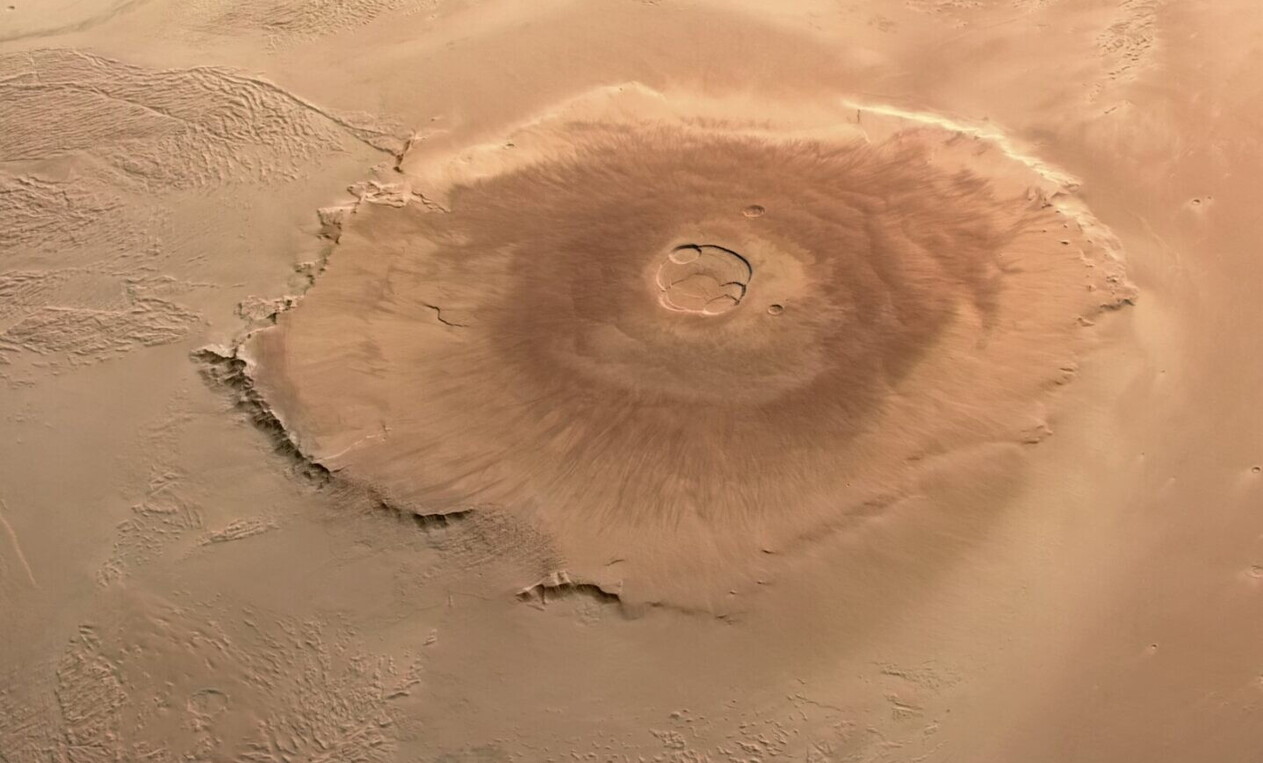
In the case of Mars, a different set of protection problems arise—not because of the direct presence of resources, but because it is strategically located for any attempt to mine the asteroid belt. Indeed, Mars is an obvious operational outpost and an intermediate base for mining missions. It is this centrality that raises concerns about how the impact of belt mining on the Martian surface might be contained. Mars is a unique place, with structures formed over billions of years. Its giant dormant shield volcano, Olympus Mons, stands three times higher than Mount Everest. We would no more allow it to be mined for trivial purposes, such as driveway chips or souvenirs, than we would allow the pyramids, Stonehenge, or Uluru to be used for such ends. There are places and things we value, and this is unlikely to change in space. What remains less clear is the point at which the responsible use of resources becomes unreasonable.
The easiest way to avoid environmental damage is, of course, not to go and not to send robotic proxies into places we deem important. This may even seem like a commercially sound option. Because of the enormous costs of establishing infrastructure and the steep learning curve of future operations, no one has an initial incentive to be the first to mine.
Everyone has good reasons to wait for a later, less costly wave. This is particularly true for the private commercial interests expected to benefit from asteroid mining. While private corporations may fund smaller experimental missions, a scaled-up wave of mining will likely require significant state subsidies, offset against declining metal reserves on Earth and the prospect of long-term advantages.
Why go into space?
Some of these advantages will be commercial; others concern the future of life on Earth. There is an interlocking series of rationales for expanding the human presence across nearby space: we need a presence around the Moon to make Mars more accessible; we need access to Mars as the obvious staging post for the asteroid belt; we need the belt to mine it; and we need mining to construct extensive near-Earth infrastructure. Ultimately, we need such infrastructure to transition from a largely closed Earth to an “open Earth”—a system where materials can be moved to and from the surface. Often, we think of space mining only in terms of returning materials like platinum group metals, but it is just as important to be able to remove materials, such as excess CO2 or, with extreme caution, radioactive waste, from the Earth system.
Figuratively, the planet needs to breathe, taking in what is needed and cautiously expelling what is toxic. We might think of Earth as analogous to a terrarium—an ecosystem enclosed in a jar. Such systems can work well for a time, but when they break down, they do not self-correct. The lid then needs to be popped; materials must be added and others removed to restore balance. They must shift from closed to open. This is where we are now with our home planet. We are in the process of popping the lid, and activities in space are how this task is getting done.
This necessity creates a trade-off for protection. We can give human life on Earth its best chance of a flourishing future, but only if we are ready to make compromises elsewhere. This does not erase our responsibilities. There are places and structures in space that deserve protection. We have only one Moon and one Mars; both should be protected. There are also large bodies elsewhere—other moons, the dwarf planet Ceres, and the giant asteroid Vesta in the belt—that we should protect to some degree. But we cannot protect everything, and protection does not rule out responsible use.