
The future of space stations
After the ISS cooperation or strategic fragmentation?
The transition toward orbital infrastructure driven by commercial logic is now well underway. Europe must decide whether to participate as a major player or simply a customer; paths that carry profound implications
17 minWhile space stations were once primarily associated with astronauts and inspiration, they now underpin emerging commercial markets and generate significant technological spillovers. Low Earth Orbit (LEO) is no longer solely a domain of exploration; it is increasingly a realm for the utilization of space, where economic activity takes root, technologies mature, and future applications can scale.
A growing array of future markets depends on a sustained human and robotic presence in orbit. Among the most advanced is pharmaceutical and biomedical research, where microgravity enables experiments that cannot be replicated on Earth. Beyond this, in-space manufacturing and materials science are emerging as promising fields, leveraging the unique physical environment of orbit to produce, for example, higher-quality semiconductors and advanced materials.
Recent developments illustrate the acceleration of this trend. South Korean pharmaceutical company Boryung has committed $50 million to Axiom Space, signaling growing private-sector confidence in orbital R&D. European actors are also positioning themselves: UK-based Space Forge is advancing in-space semiconductor manufacturing and, building on technological heritage from the ISS, recently demonstrated key processes such as plasma generation in orbit—an important step toward autonomous production platforms in LEO.
Demand for such capabilities is already materializing. The Starlab commercial space station has reportedly fully reserved its initial commercial payload capacity years ahead of launch, indicating strong market interest in sustained access to orbital infrastructure. At the same time, infrastructure providers are expanding their ambitions. Companies such as Axiom are leveraging their expertise in building and operating space stations to enter adjacent markets, including concepts for space-based solar power.
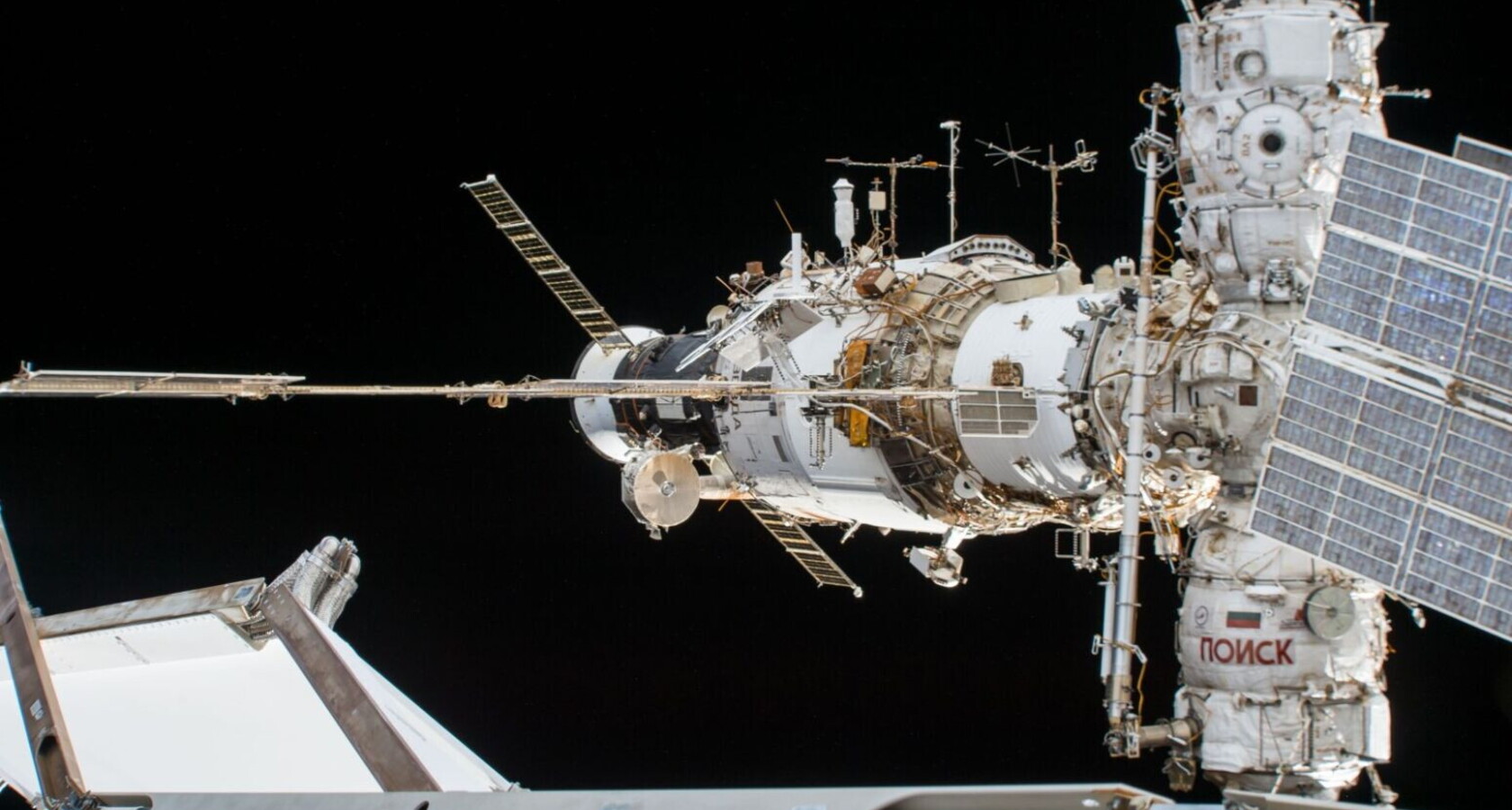
These developments point to a structural shift. Space stations are no longer endpoints of exploration, but enabling infrastructure for a broader orbital economy. Therefore, with the International Space Station (ISS) nearing potential retirement, a key strategic question emerges regarding the future configuration of human spaceflight in LEO. Control over this infrastructure will determine who captures the value of emerging applications, who defines new markets, who sets technical standards, and who benefits from the resulting technological spillovers.
Main solutions and architecture
To bridge this gap and secure the future of human activity in LEO, current solutions are converging around two principal models for developing and operating space stations. These models differ in their governance, financing, and the division of responsibilities between public and private actors. They are generally conceived as i) national solutions, ii) systems relying on the decommissioning structure of the ISS, or iii) independent “free-flyers.”
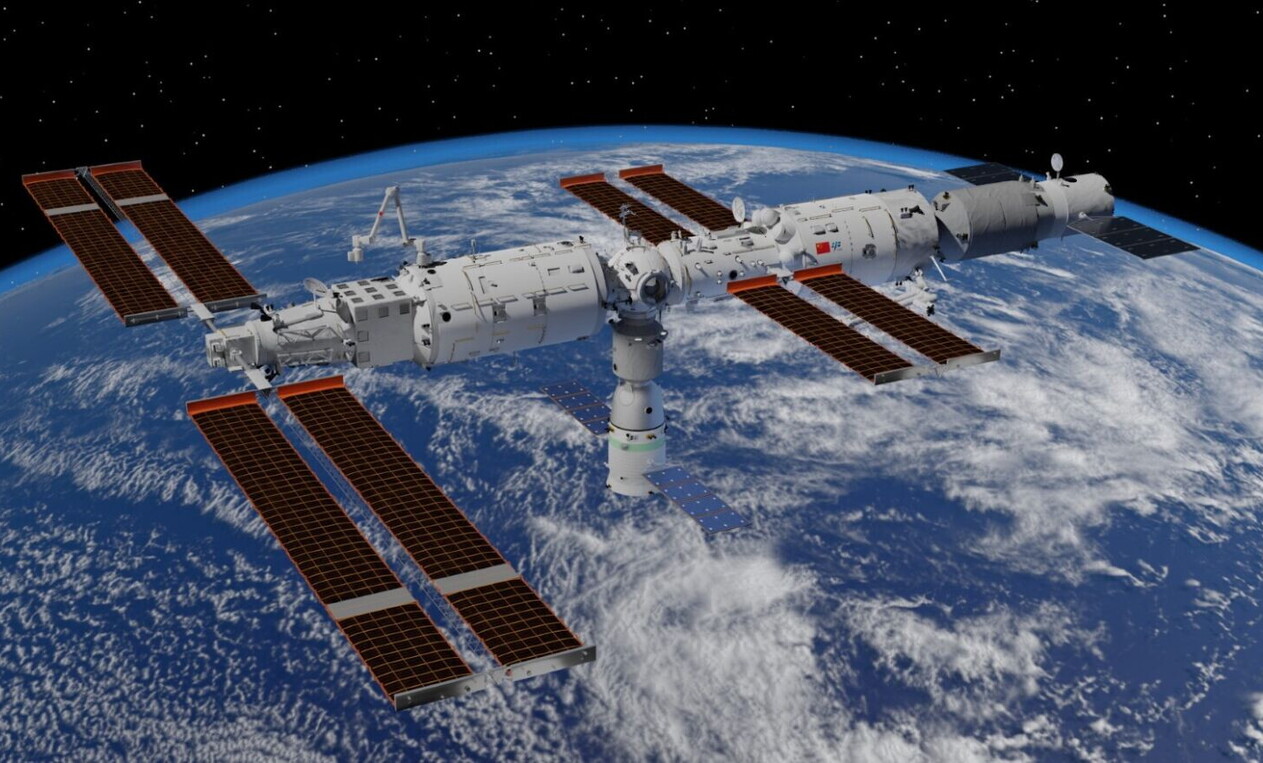
The first established model is the fully governmental space station, designed, financed, owned, and operated by states. Prime examples include China’s Tiangong and the upcoming Russian Orbital Station (ROS).
In this model:
• Public actors retain direct control over the platform’s development, strategic orientation, and operational governance.
• Infrastructure is treated as a sovereign asset, embedded in national policy objectives.
• Access and utilization are determined through governmental or intergovernmental agreements.
This approach places the state at the center of human spaceflight, ensuring full alignment with national priorities; however, it also requires high and sustained levels of public investment.
The second and third models for future LEO activities are currently taking shape as commercially led destinations. In these scenarios, which may include independent free-flyers, private companies take the lead in designing, building, and operating the orbital infrastructure and its various modules.
Public actors are involved, but they take on a different role:
• Governments are not direct developers or promoters of infrastructure.
• Instead, they act as future customers, purchasing only the services required for their missions, research activities, or astronaut flights.
• This creates a public–private ecosystem where private industry develops and maintains the hardware while public agencies, or governments, as well as other private industries, procure services as clients.
This approach reflects a strategic shift: states are transitioning from infrastructure providers to service buyers, fostering a market-driven model for LEO operations. Alongside this model—originally centered on NASA’s Commercial Low Earth Orbit Destinations (CLD) program—a new hybrid architecture may emerge. Given the slow maturation of the market and the challenges of developing entirely private solutions, NASA might consider an alternative option. This would involve purchasing a core module to be attached to the International Space Station (ISS), which would then serve as an autonomous station once the ISS is decommissioned. This core would provide essential services such as power, propulsion, and life support, as well as several docking ports for connecting additional commercial modules.
Diverse commercial architectures and transition pathways
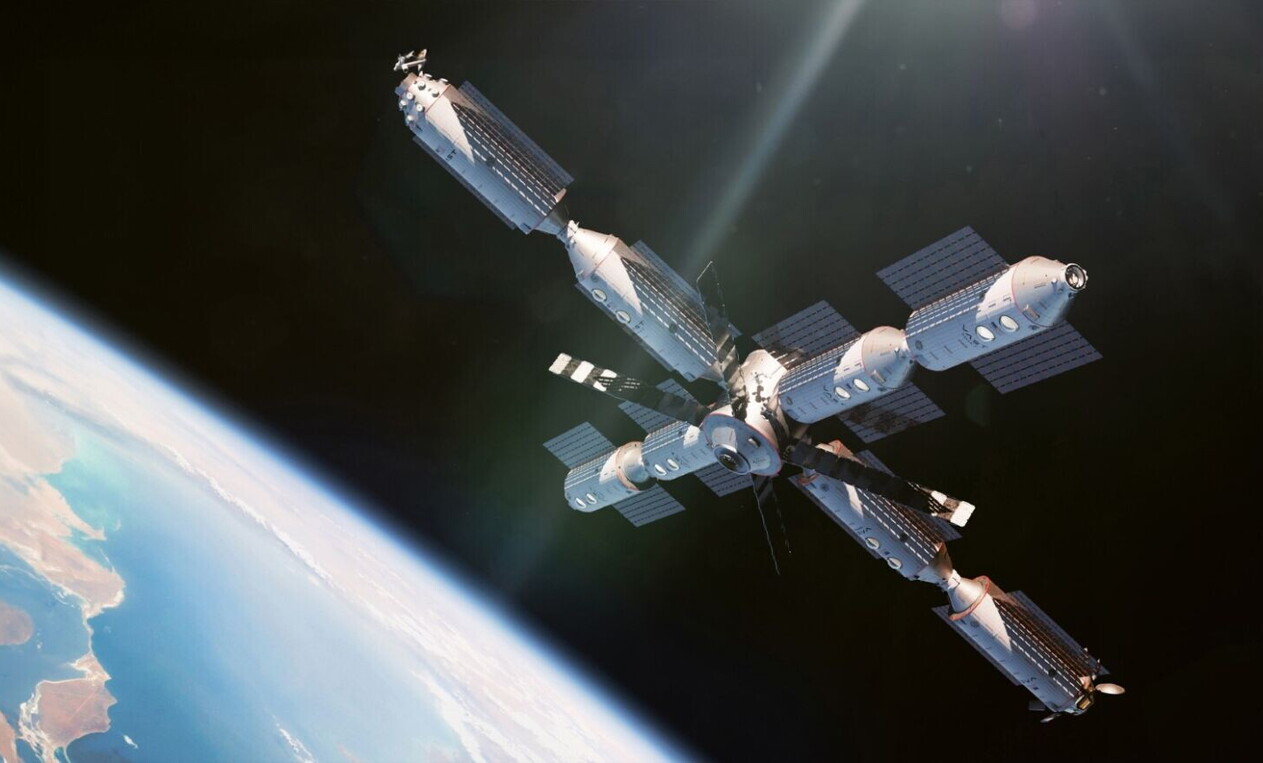
Within the commercial model, several architectures are emerging, each offering different geometries and transition phases between the ISS and fully independent commercial stations. These include:
• Commercial stations developed entirely on the ground and launched directly as autonomous platforms.
• Hybrid configurations, where different modules or capabilities are phased in gradually, allowing operators to build experience and move from an ISS-dependent phase to a self-sustaining commercial infrastructure.
These varying pathways also illustrate a broader trend: the transition from a single large intergovernmental platform (the ISS) to a diversified orbital economy composed of multiple stations, each following its own legal, operational, and commercial logic.
Among the different solutions, China has already established an independent orbital presence through the Tiangong Space Station, while the United States is shifting toward a model that relies on commercial providers to sustain activity in orbit. Europe, in contrast, remains only peripherally involved in this evolving landscape, contributing mainly through industry partnerships (namely through Airbus in the Voyager station) rather than acting as a leading strategic player or provider of infrastructure.
Regulatory and governance considerations
The legal and governance challenges surrounding commercial or initially hybrid modular space stations primarily concern the determination of jurisdiction over both the overall infrastructure and its individual modules.
This assessment depends on two fundamental elements: the legal nature attributed to the station as a whole and/or to single modules. In the context of commercial stations, it becomes especially important to establish the scope of the concept of “space object” and whether it should be approached in a unitary or modular manner, either by defining each module as a distinct space object despite its integration into a larger structure, or by treating the entire station as a single space object. This choice will affect the determination of the state of registry and of the launching state, together with its associated obligations under international space law.
The legal and governance framework of these solutions will also raise a number of issues with strategic and political implications for Europe. These challenges will be particularly significant regarding the interplay between international space law, national sovereignty, and commercial dynamics. This will be especially relevant in the case of private space stations that could, in the future, incorporate an interoperable blend of commercial modules and, potentially, government modules. Here central issues will include determining the applicable legal framework and the legal limits on activities conducted on board; potential restrictions by commercial operators on national modules; the definition of liability and cross-waiver mechanisms between public and private actors; accounting for potential corporate crises and their effects; as well as the protection of intellectual property rights and the terms of use of the module, among others. As with any agreement, public “consumers” should carefully evaluate and weigh the pros and cons of participating in such projects, including with regard to preserving their autonomy and freedom of action while benefiting from them.
Therefore, these aspects will have to be clarified at the earliest stages of planning, as they are essential for guiding governmental decisions on potential participation in the different solutions, including by European actors.
The policy and strategic implications: customer or shaper?
The question is not whether geopolitics will extend into outer space: it is already clear that the trajectory of terrestrial politics will shape the development of orbital infrastructure. Just as the ISS emerged in the context of the post–Cold War “end of history,” the next generation of space stations is taking shape under conditions of renewed geopolitical competition. For Europe, the question is therefore not whether to participate, but how: whether it remains a junior partner and customer within externally driven systems, or whether it recognizes human spaceflight in LEO as strategic infrastructure that it must help shape and lead.
First scenario: Europe as a customer
In this scenario, Europe accepts a role as a customer in the emerging LEO economy, relying on access to infrastructure developed and operated by external actors. In practice, this would most likely mean continued alignment with the United States and its commercially driven ecosystem, with European institutions and companies purchasing access to privately owned orbital platforms.
Such an approach would appear as a continuation of the ISS model, but in reality reflects a fundamental shift. While the ISS was based on intergovernmental cooperation and shared governance, the developing environment is increasingly structured around commercial ownership. European access would therefore depend not only on market dynamics, but on political and regulatory decisions taken outside Europe. In the context of evolving transatlantic relations, this creates a structural asymmetry: European access to orbit could be prioritized, constrained, or leveraged in line with US strategic interests.
This dependency is likely to shape European investment behavior. Uncertainty over long-term access, pricing, and governance reduces incentives for both public and private actors to commit at scale. Over time, Europe risks becoming embedded in an ecosystem whose infrastructure, technical standards, and strategic direction are defined externally, limiting its ability to influence the evolution of the LEO economy.
There is also a question of identity. Europe has traditionally placed particular value on the ISS as a symbol of rules-based international cooperation. Transitioning into a system where it plays only a marginal role would mark a departure, or at least a weakening of this model.
At the same time, this pathway offers short-term advantages. It lowers upfront investment requirements and allows European actors to plug into a rapidly developing commercial ecosystem. This may support the growth of sectors such as pharmaceutical and biomedical research, which depend on access to microgravity. However, without autonomous infrastructure, these emerging ecosystems remain contingent on external providers, and ultimately subject to US regulatory approaches. In this sense, Europe as a customer represents a path of least resistance but one that risks entrenching long-term dependency in a domain that is increasingly relevant to economic and geopolitical competition.
Second scenario: Europe as a shaper
In this scenario, Europe recognizes human spaceflight in LEO as a strategic enabler of its space power and takes an active role in shaping it. Rather than relying on external providers, it actively develops a European-led solution, anchored in its own industrial and institutional capabilities, while opening participation to a coalition of international partners.
Such an approach would build on Europe’s legacy within the ISS program, preserving and adapting its core principles to a new geopolitical context. A European-led station could serve as the foundation for a renewed alliance of spacefaring middle powers, bringing together partners such as Japan and Canada around a model of cooperation that is distinct from both US-led commercial ecosystems and more state-centric alternatives from China and Russia.
Internally, such a project would act as a powerful driver of European cohesion. A shared exploration and utilization program in LEO would align national, supranational, and intergovernmental actors around a common objective, creating a tangible expression of European ambition. Externally, a European-led station would signal capability and intent. It would position Europe as an autonomous actor able to initiate and sustain large-scale strategic infrastructure, thereby increasing its attractiveness as a partner for countries seeking alternatives beyond the two dominant poles of the United States and China.
Crucially, this scenario would give Europe direct control over infrastructure that underpins future markets. Rather than depending on external providers, it would be able to define access conditions, secure critical IPRs, support its own industrial ecosystem, and capture a greater share of the economic and technological benefits associated with LEO activities. In this scenario, however, the challenges are significant. Developing and operating a space station requires substantial and sustained investment, political alignment across many actors with sometimes competing interests, and a willingness to assume greater strategic risk. It would also require Europe to overcome fragmentation and move toward more coordinated decision-making in space policy. In the long term, Europe would also need to answer whether it simply wants to catch up with US and Chinese capabilities or become an actual leader in human spaceflight.
Yet, these challenges reflect the very nature of the choice at hand. If Europe seeks to shape the next phase of the space economy rather than adapt to it, it must accept the costs and responsibilities that come with leadership.
A strategic crossroads
As the landscape of LEO space stations evolves, Europe faces a strategic crossroads. The transition toward commercially driven orbital infrastructure, beyond nationally led efforts, has begun. This is reshaping not only how space stations are built and operated, but also how access, governance, and value are distributed in LEO.
Here the choice for Europe is not simply whether to participate, but in which capacity: as a customer embedded in externally defined systems, or as a shaper able to influence standards, governance models, and emerging markets. Each pathway carries distinct implications for autonomy, industrial competitiveness, and geopolitical positioning. What is clear, however, is that Europe must make this decision consciously and proactively. The future orbital ecosystem will reward actors that invest early, define architectures, and set the rules for cooperation. Whether Europe chooses dependence or leadership, its actions in the coming years will determine its role in the next phase of human spaceflight and in the broader orbital economy that will unfold, including for its industries.