
Space becomes epic and myth
The sky we never lost
From the mercury seven to the $600-billion space economy, space is no longer only a matter of epic feats and planting flags. It has become a critical infrastructure, a geopolitical arena, and a battleground between nations and powerful private corporations. How we choose to talk about it will shape how it is governed—and by whom
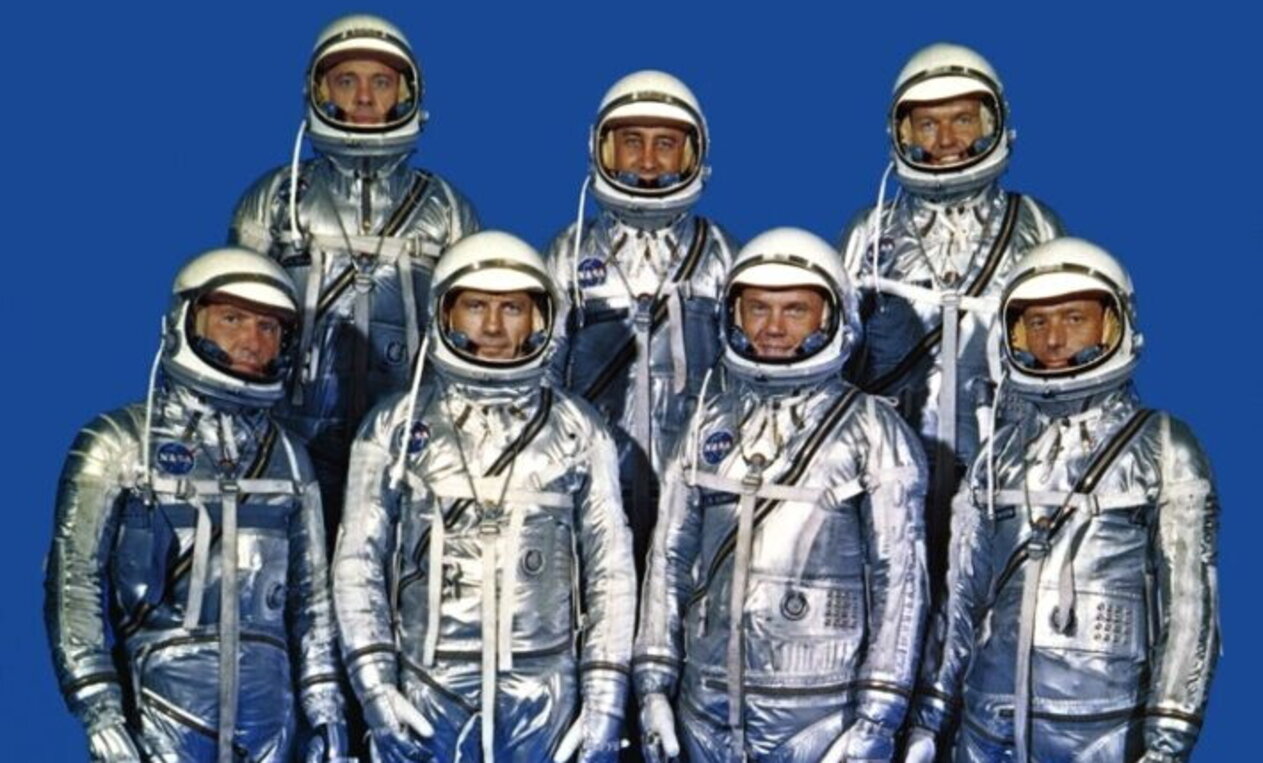
15 minOn April 9, 1959, in a ballroom at Dolley Madison House in Washington, seven men in suits and ties were introduced to the world.
They were the Mercury Seven, or, as they were immediately dubbed, the “first astronauts” of the United States, even though none of them had yet flown in space. That same day, LIFE magazine sent a written offer: half a million dollars for the exclusive rights to tell their story. Half a million for heroes who, despite not having orbited even once, already carried space within them, as a symbol, as a promise. In the months that followed, the whole of America grew attached to their faces on magazine covers. Their wives were photographed in their homes in Cape Canaveral; the names and stories of the astronauts became as familiar as those of movie stars.
It was the early 1960s, and space was becoming a story, an epic, a legend. It was the front line of the Cold War, transposed beyond the limits of the sky: the vanguard of Western values and capabilities—American, of course—against those of the Soviet Union.
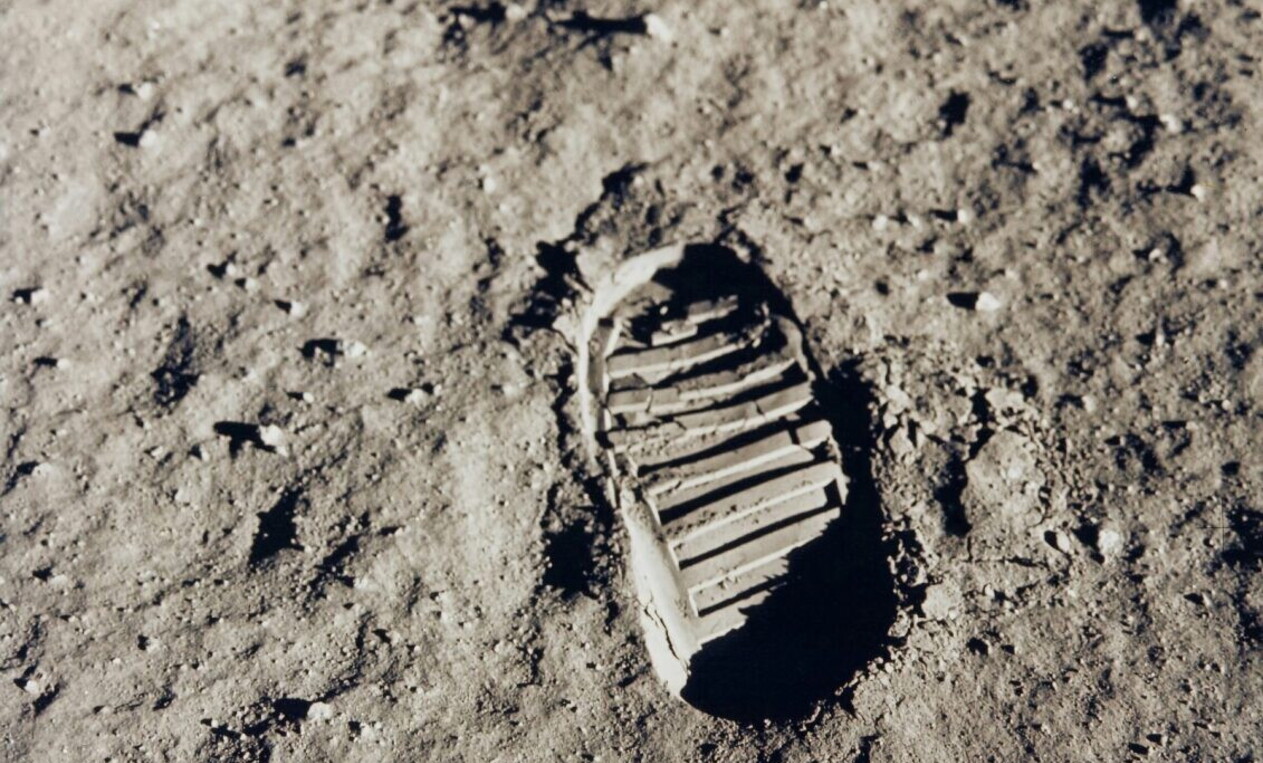
Ten years later, in July 1969, when Neil Armstrong reached the Sea of Tranquility—the first man to touch the surface of another world—the space race was considered over in the eyes of the general public. Despite the initial and overwhelming Soviet advantage, the United States had won. What would come next—satellites, interplanetary probes, even the Space Shuttle and space stations, as far as the International Space Station (ISS)—was and would remain a matter for specialists, not opinion leaders or decision makers.
Just as it had begun, the narrative of humanity’s cosmic adventure seemed to fade with remarkable speed. Not because of a loss of technical interest, but due to a kind of collective removal from public imagination. In the 1970s, after the Moon landings, the covers of LIFE magazine became fewer and fewer, and half-million-dollar contracts became a distant memory.
Yet, while collective attention drifted elsewhere, space quietly—and inexorably—began to become the supporting infrastructure of our planet. In a few decades, unnoticed by the general public—or perhaps through lack of clear information—all global financial transactions, weather forecasts, GPS localizations and climate monitoring systems would become entirely dependent on orbital assets. So much so that what geographer Nicholas John Spykman wrote a century ago about sea power also applies to space: today, whoever controls space controls the Earth.
This is why space has returned to the front pages (on TV and social networks). However, the way it is reported has changed radically since 1959: space is no longer (just) the adventurous saga of men and women willing to challenge the unknown for reasons of State. It is the chronicle of a business worth hundreds of billions of dollars; of a new “continent” where a private entrepreneur can express and exercise the power of a government; it is an arena—perhaps the arena—of geopolitical confrontation. However, instead of the sprint of the 1960s and 1970s, space is now embarking on a marathon: like the internet in the 1990s, it has reshaped and will continue to reshape our daily lives. And from now on, it is here to stay.
Of course, the narrative change is not just a cultural matter: it is a strategic issue. Because how we talk about space determines how we will govern it. Or whether we will govern it at all.
Three drivers, one return
Its renewed prominence in public debate is the result of three converging phenomena, which can be accurately documented.
The first is privatization and a drastic reduction in the cost of accessing orbit. In 2025, Elon Musk's space company SpaceX carried out 170 launches, including five Starship tests—one every 28 hours. Thanks to the possibility of partially reusing space launch vehicles, launch costs have been reduced by up to 65 percent compared to the previous decade. The reusability of rockets, orbital ride-sharing services, and the miniaturization of satellites have democratized, or at least opened up, access to space.
In 2024, the space economy moved—estimates vary, and the next few lines will explain why—about USD 600 billion globally, with the commercial sector accounting for nearly 80 percent of the volume. Projections for 2035 are for USD 1.8 trillion—at a growth rate twice that of global GDP—and there are those who predict a value of up to USD 3 trillion in the same period. This difference is largely attributable to the difficulty of identifying the limits of a sector capable of enabling other, different and seemingly distant sectors: can the profits of a broadcaster using a satellite constellation be classified as part of the space economy? If so, what proportion? The debate remains open, but it is certain that when a market grows at a rapid pace, the media cannot ignore it—and this means public attention.
The second catalyst is the return of competition between powers. After a period of peaceful cooperation symbolized by the ISS, the United States, China, Russia, and a growing number of countries with their own space ambitions or programs are building increasingly autonomous orbital architectures, which are often incompatible. This is a significant development, but it is only one of the factors capable of bringing space back into the spotlight—not necessarily the main one.
The third catalyst is the personalization of the narrative. Elon Musk, Jeff Bezos and his Blue Origin, or Kam Ghaffarian with Axiom Space, are not just entrepreneurs: they are flesh-and-blood media hubs, capable of bringing space back into the daily narrative of technology, geopolitics, and imminent horizons: in a word, the future. In 1959, the Mercury Seven were the narrative vehicle for telling the story of the US’s projection beyond the sky. Today, Musk and Bezos are entrepreneurs who build their public narrative with their own means—quite literally, using platforms they own, from X to the Washington Post—and according to their own vision, often tinged with messianism.
Space is no longer just a state program in favor of a magazine; it is also the next evolutionary frontier for humankind, presided over—if not controlled—by a few private entities, each with its own personal narrative.
Emerging opportunities…
This is another reason why space horizons are no longer limited to exploration. Space is industry, services, and critical infrastructure for sectors that appear detached from Earth's orbit but are actually dependent on everything that happens or travels near our planet. Much of our lives, and therefore our economy, is now space-based.
The opportunities being enabled are anything but theoretical. Precision agriculture uses satellite data to optimize irrigation and fertilization, reducing waste and increasing yields. Global financial markets depend on the synchronization provided by PNT (positioning, navigation, and timing) systems, with a precision capable of enabling transactions in the order of nanoseconds. Environmental monitoring—from greenhouse gas emissions to deforestation and ocean health—relies on low-orbit satellite constellations (between 100 and 2,000 kilometers above the Earth) which provide data with progressively shorter revisit times.
In 2025, California-based AstroForge launched its first mission to an asteroid, developed in ten months for USD 6.5 million—figures that were unthinkable a decade ago, when a similar mission would have required state budgets and a decade of development. Experts estimate that the space mining market could be worth USD 5 billion by 2030 and USD 23 billion a decade later. Water extracted from lunar soil can be converted into hydrogen and oxygen—fuel for deep space missions. Startups such as Seattle-based Interlune promise to commercialize rare earths and helium-3 extracted from regolith, or “selenite dust.” Starcloud, Google, Nvidia, Amazon, and SpaceX swear that in a few years, data centers—the “wells” from which we draw computational power for artificial intelligence—will be in space, ready to reduce the energy and water consumption that is already a concern here on Earth.
This is not science fiction: these are projections driven by projects already underway, investments already allocated, and technologies already proven or on the verge of testing. Far from being a waste of resources, space development generates what economists refer to as “technological trickle-down,” a process whereby innovations created for orbit spill over into the civilian economy.
GPS, developed to guide U.S. nuclear missiles during the Cold War, now guides global maritime traffic and allows any smartphone to know its location with metric precision. Materials developed to withstand the extreme conditions of space—temperatures ranging from -150 to +150 degrees Celsius, intense radiation, and absolute vacuum—are used in medicine (prosthetics, surgical instruments), automotive (lightweight materials), and construction (advanced thermal insulation). Even software used for the early diagnosis of microcalcifications in the breast is derived from algorithms used to correct the “myopia” of the Hubble Space Telescope.
Global satellite connectivity also promises to bridge the digital divide. Mega-constellations such as Starlink, OneWeb, and Amazon Leo, as well as their Chinese counterparts, are composing networks of thousands of devices in low orbit, offering latency comparable to fiber optics and planet-wide coverage. By the end of 2025, Starlink was operating over 9,350 satellites in orbit, accounting for more than half of all active devices around the Earth. For developing countries, rural communities, and ships in the middle of the ocean, this means access to education, telemedicine, and digital services that would otherwise be impossible.
… And risks to be managed
It is inevitable that the narrative of opportunity is accompanied by that of risk. Increasing militarization, the concentration of power in private hands, and the fragmentation of international governance are concrete issues that demand immediate attention. However, as has been the case since the launch of Sputnik in 1957, opportunity and risk are not alternative narratives; they are two sides of the same process.
The same technology capable of monitoring emissions can be used for military purposes; the satellite that connects remote areas is also a strategic asset. This duality is structural, not contingent. Rather than paralyzing progress, this reality underscores that space development requires awareness, transparency, and public debate commensurate with the complexities at stake.
The 1967 Outer Space Treaty—the “Magna Carta” of the beyond-sky—was drafted for a world with only two sovereign actors and no private space companies. The Artemis Accords, signed by 61 nations as of January 2026, attempt to update this constantly evolving framework. Together with numerous national regulations—including the Italian regulation approved just a few months ago—they represent a concrete effort to build shared rules. Whether these efforts will succeed remains to be seen, but in an increasingly fragmented world, space diplomacy demonstrates that, above the atmosphere, traditional borders do not exist.
From energy networks and transportation to finance, logistics, and pipeline security, every modern system reminds us how space integrates the global economy. Consequently, issues of resilience and governance must now—and urgently—consider our relationship with the extraterrestrial.
The responsibility of public debate
In 1959, seven men sitting around a table became legends even before flying into space. Today, few people know the names of the astronauts, but everyone knows who Musk or Bezos are. This shift in attention from the program to the entrepreneur, from the collective to the individual, is not neutral. It transforms what is politically possible and changes what the public perceives as normal.
This is why the current challenge lies in crafting a narrative that matches this new reality—a story that neither succumbs to the uncritical enthusiasm of techno-utopianism nor to a purely geopolitical alarmism that views the atmosphere as nothing more than a new front line. The reality is far more complex—and ultimately, far more interesting—than either of these caricatures.
The most important contribution that an informed, pluralistic public debate can offer is to hold together the two driving forces of the sector: technological acceleration and global responsibility.
It is a mindset we would do well to let guide our times: the greatest challenges have no borders. Neither on Earth, nor beyond.