
Space infrastructure
Who controls the orbit?
From Gagarin's capsule to SpaceX’s serial launches, space has ceased to be epic and symbolic conquest. It has become infrastructure: telecommunications, logistics, warfare, finance. Today, Earth's orbit is the real platform of global power
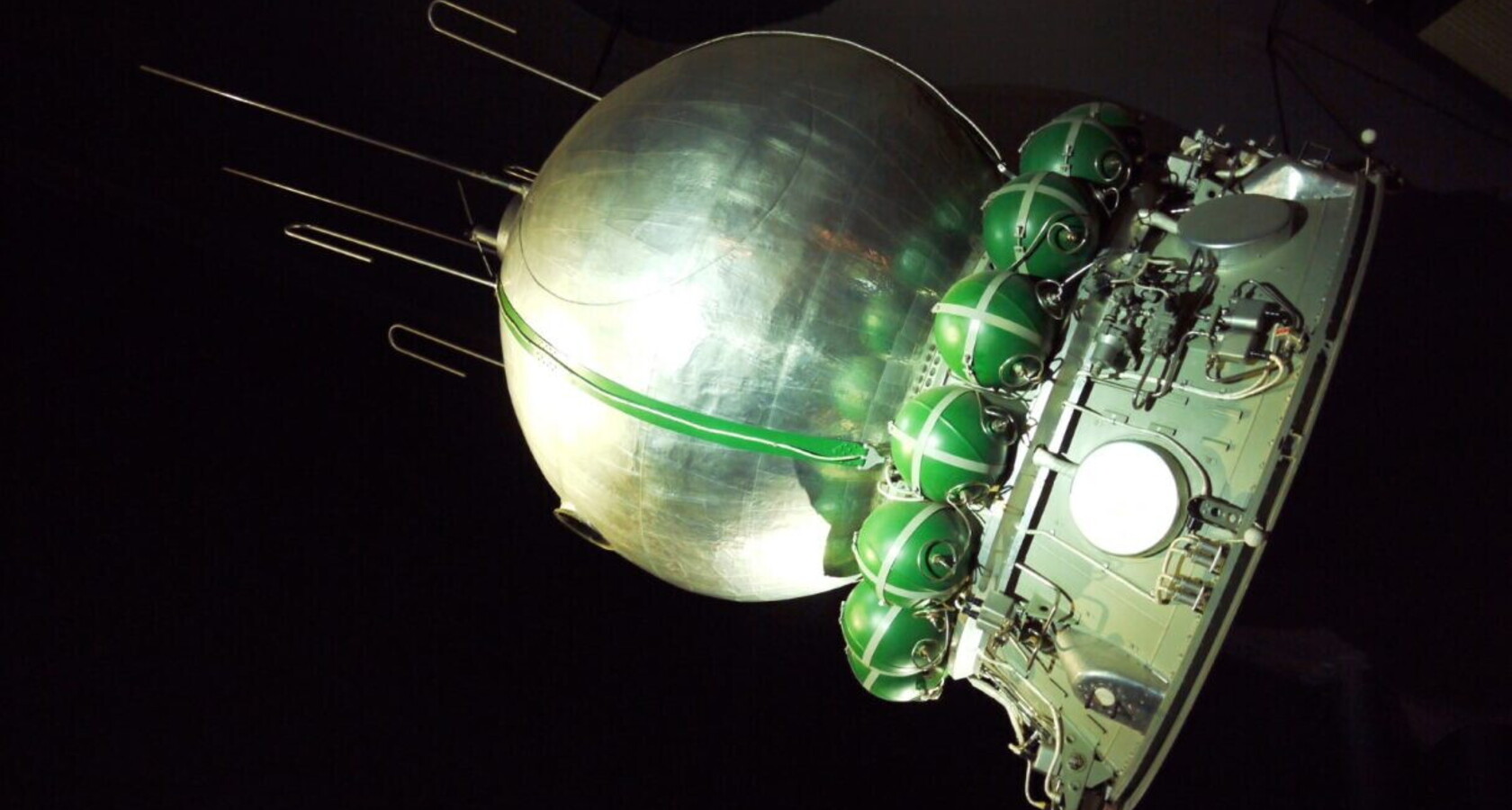
7 minIt was a far cry from the charm of Columbus’s caravels or Shackleton’s three-masted Endurance: the first spacecraft in human history looked more like a washing machine.
A Soviet washing machine, at that.
Just over two meters in diameter, a spherical capsule designed to withstand over 10 G—more centrifuge than comfort, more physics than poetry. Inside sat a superhuman selected from among other superhumans: strong, razor-sharp, and above all, just one meter fifty-seven tall. Even heroism, sometimes, is a matter of centimeters.
When Yuri Gagarin uttered the famous “Poyekhali!”—a curt “Let’s go”—his confidence was unsettling. The odds, however, were not in his favor.
Before April 12, 1961, the Soviet Union had launched seven test capsules with seven mannequins, all named Ivan Ivanovich (the Russian equivalent of John Doe). Only three returned intact. The others? Exploded, lost, vaporized.
Statistically, Gagarin had just over a 40 percent chance of living to tell the tale—he would have had a better chance if he flipped a coin. Yet that round-trip of 108 minutes changed everything.
It was not only humanity’s first trip around the Earth: it was simultaneously the fastest and farthest expedition ever undertaken. Space became a new economic and political geography.
The last continent discovered by man—and, even today, largely unexplored.
From epic to network
Science fiction imagines an imperial and commercial space: Asimov organized galactic colonies; Kubrick transformed spaceships into giant modules for cosmic exploration.
The reality, however, is more prosaic.
Earth’s orbit can be thought of as a cable suspended around the planet—perfect for transmitting data, signals, and images.
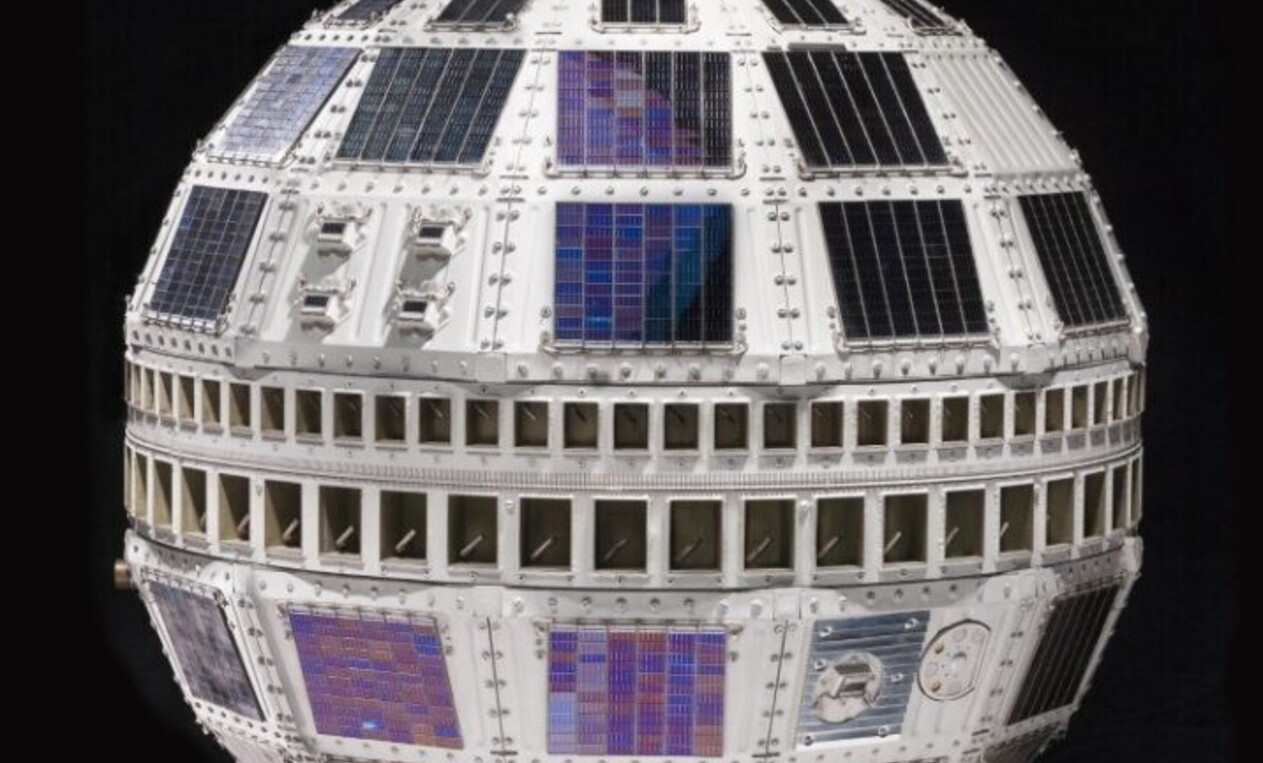
The first commercial satellite, launched by AT&T Bell Laboratories, was called Telstar: a faceted white sphere with dark solar panels. An icon so powerful that it inspired the classic soccer ball with 32 black and white panels.
With satellite telecommunications, space also became a military domain. The race to the Moon became the defining symbol of the Cold War. A new Iwo Jima or Berlin 2.0, but projected beyond the atmosphere.
The lunar excitement, however, was short-lived. Between 1969 and 1972, six American missions—from Apollo 11 to Apollo 17, skipping Apollo 13 (because even NASA respects superstition)—took man to the Moon. And then, that was it.
Oil crises, social tensions, public budgets under stress—the giant Saturn V rockets used by NASA in the Apollo program remained on the ground like horizontal obelisks, monuments to a heroic but unsustainable era.
Austerity breeds compromise: the Space Shuttle. Reusable, elegant, capable of launching satellites (many of them military), working in orbit, and returning like a glider.
Much safer than Gagarin's capsule: 2 disasters in 135 flights, a risk of 1.5 percent. For a commercial flight, this would be unthinkable, but for space travel in the 1980s, it was considered acceptable.
Orbit as strategic infrastructure
The 1980s saw the advent of low-cost pioneering. Space became a scientific laboratory and military platform. Ronald Reagan's Star Wars project remained on paper, but it confirmed one thing: whoever controls orbit controls conflict.
GPS was born. Initially designed for military use, it was opened to civilians by Washington after the 1983 shooting down of a Korean civilian aircraft that had accidentally entered Soviet airspace. Military-grade precision became everyday infrastructure. Global logistics accelerated. Trade exploded.
Satellites went from around 200 in the late 1960s to over 15,000 today (many of which are no longer in use).
But the real breakthrough is only recent. And it has a name. The decisive idea—to drastically reduce the cost of access to space—came from Elon Musk.
Not changing the destination, but the production process. Recovering rockets. Reusing them. Serializing launches.
SpaceX transformed space from a Hollywood blockbuster to a weekly TV series. In 2025, it made over 165 orbital launches in a single year: almost one every two days. Orbit ceased to be an epic undertaking and became a delivery service.
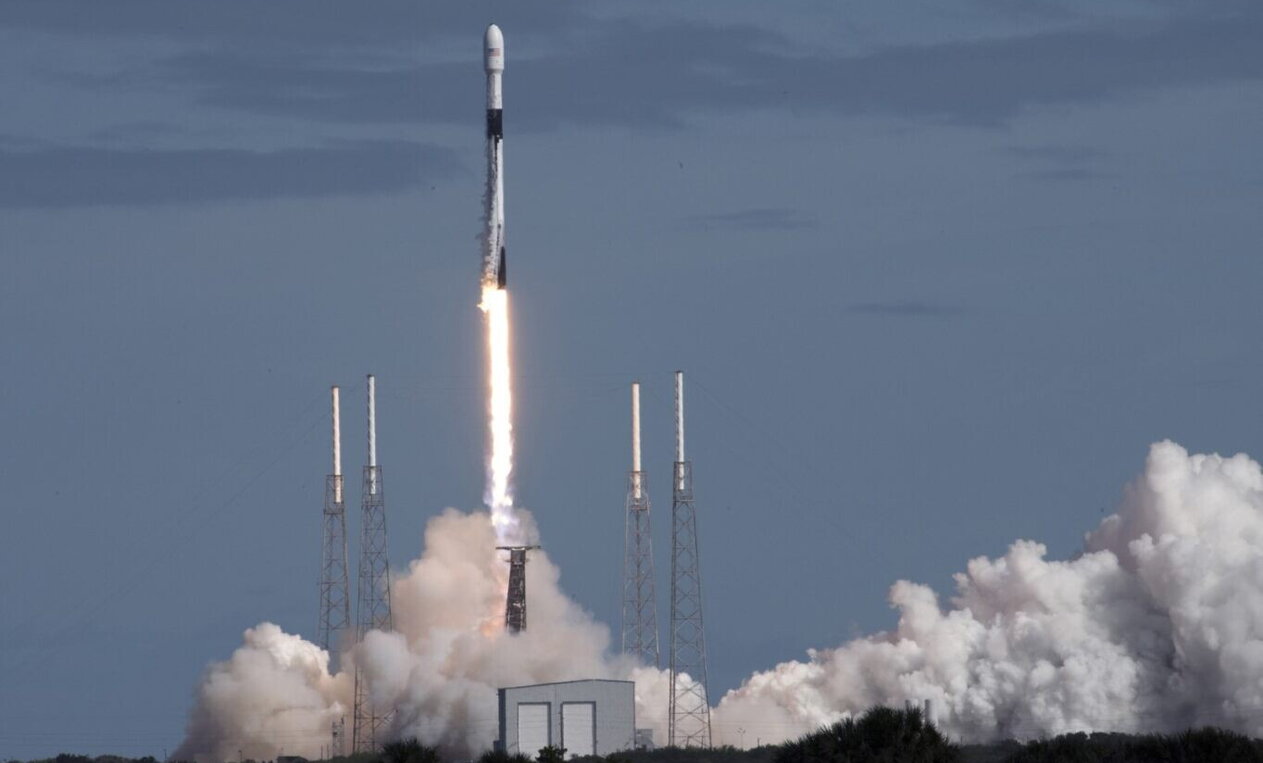
SpaceX launched Starlink in 2019: thousands of satellites in low orbit (500 km), low latency, global coverage, and systemic redundancy.
At the beginning of 2026, there were approximately 9,400 operational satellites. This number is constantly changing because this is not a fleet—it is a living organism. It is the basis for commercial traffic and ground logistics.
But space is also, increasingly, a military space.
In Ukraine, satellite communications, high-resolution images, and real-time data have transformed the battlefield into a dynamic map, almost like a video game. Without satellites, drones are blind, missiles are deaf, and armies suddenly seem like something out of the 20th century. Israel’s supremacy is heavily dependent on US satellites, which provide the information needed to activate its protective domes.
Space is not yet—despite the dreams of novelists—a mining district like the one foreshadowed by the Nostromo in Alien. Asteroid mining remains science fiction without a business plan—the environmentalism of Avatar is safe—but its economic value is already decisive.
We do not live under a starry sky. We live under a blanket of satellites, as if under a planetary Wi-Fi network. It is a network of invisible cables, made up of pixels, signals, and coordinates. It is GPS that knows where we are even when we would prefer it didn’t. It is critical infrastructure, like oil or electricity networks. It is the connection between modernity and the future. Without it, we regress 100 years.
Science fiction promised us spaceships, distant planets, and exotic minerals. Reality gave us something much more powerful: coordinates, synchronization, and precision.
Because in the end, we quickly understood one thing—whoever controls space controls the world.