
The great African question
Where the grid is absent
Access to water and electricity remains one of Africa’s major challenges. Against a backdrop of a growing population and increasing energy needs, the key issue is how to balance sustainability, reliability and development
10 min“The Boy Who Harnessed the Wind” is a hit musical in London theaters in 2026. Based on an autobiographical book, it tells the true story of a Malawian boy, William Kamkwamba, who, to save his village from drought, manages to build a rudimentary windmill on his own to generate electricity and get the broken water pump working again. It is a metaphor for Africa’s struggle to escape the endemic poverty that characterizes a continent where 600 million people, concentrated in the sub-Saharan region, still lack access to electricity.
Energy for water
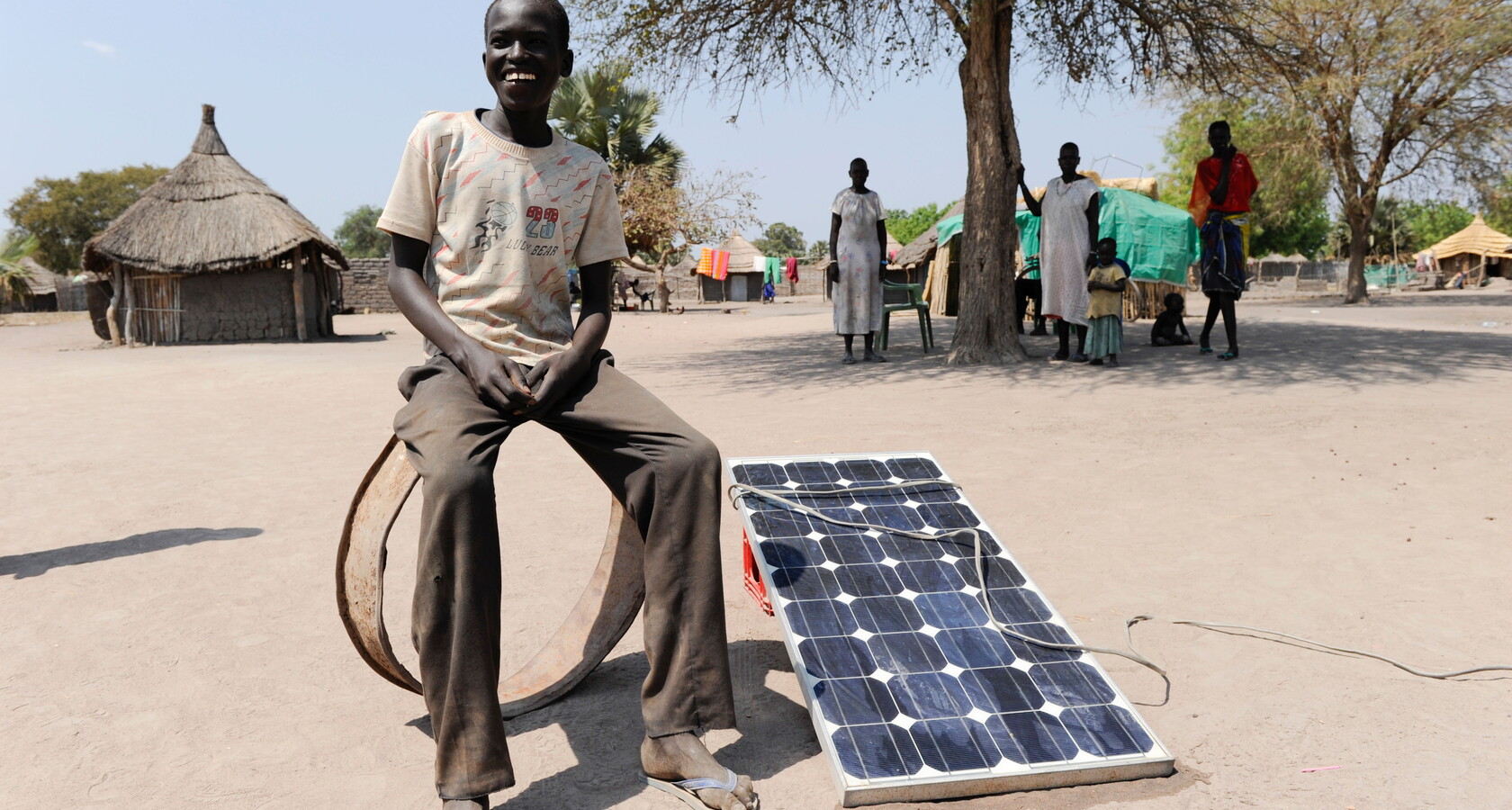
The primary reason developing countries—not just those in Africa—need electricity is to pump water from aquifers where it is uncontaminated, thereby protecting people from viral diseases such as cholera, which is one of the leading causes of infant mortality. Much of Africa’s population lives in areas where the source of drinking water is the subsurface aquifer, which lies at depths greater than 50 meters. To reach it, wells are needed—dug with drills or by hand—from which water is extracted and brought to the surface using pumps. These pumps are powered by electric motors, like the one used by the boy who harnessed the wind, or by diesel engines. Electricity must always be generated from some other primary source, and in recent years the preferred solution has been photovoltaics. The solar panels capture energy from the sun, produce electricity and enable clean water to be provided to villages in poorer rural communities. It is hard to resist the charm of this almost bucolic image, where everything seems simple: nature is respected, energy appears abundant and clean, and problems seem to find an immediate solution.
This vision is appealing in part because it seems far removed from the reality of wealthy Western cities—those where institutions like the World Bank, the OECD, or the International Monetary Fund are headquartered—where electricity is delivered through vast interconnected grids, supported by extensive infrastructure and large-scale power plants that have ensured the continuity and security of energy supply for decades.
For this reason, too, many international financing programs today tend to prioritize projects based on distributed photovoltaics over the development of traditional electrical systems. The underlying idea is that decarbonization can begin precisely in countries that have yet to build much of their energy infrastructure, by relying directly on renewable technologies.
The limits of distributed photovoltaics
Experience in recent years, however, has revealed the limitations of this approach, especially in the most vulnerable contexts. In many parts of Africa, the immediate priority is to extract water from depths of 50 or 100 meters to ensure safe drinking water and avoid relying on contaminated surface sources. And when water is also needed to irrigate the fields on which communities’ food security depends, energy needs grow rapidly: irrigating maize crops, one of the most common staple foods on the continent, requires enormous volumes of water and much more stable and powerful systems.
Photovoltaics are certainly an effective solution to one of Africa’s structural problems: the dispersion of the population across vast rural areas that are difficult for traditional power grids to reach. Distributed generation is well-suited to small farming villages and can offer rapid solutions in emergency situations, especially for access to drinking water. Transforming these systems into infrastructure capable of sustaining long-term economic and social development, however, is a far greater challenge.
For example, for water supply, a photovoltaic panel of about 10 square meters can generate, during the sunniest hours of the day, up to 1,000 watts of power—one kilowatt—enough to power an electric motor that pumps 2–3 liters of water per second. But this system can only operate for a few hours a day—not at night, nor when it is cloudy or raining. For this reason, it is often necessary to pair the panels with storage tanks to preserve water not used during peak production times, which introduces additional challenges related to maintenance and the risk of contamination. Initiatives to promote the use of solar panels in isolated communities have been underway for decades, but experience on the ground has also highlighted several operational limitations. In many contexts, the systems deteriorate more rapidly than in industrialized countries, due to particularly severe weather conditions, ranging from rainy seasons to long periods of drought. Maintenance in villages is always difficult and often impossible, and theft of electrical cables or metals—which are then resold on the lucrative scrap market—is common. In the case of irrigation wells, 5-kilowatt motors are required, which need approximately 50 square meters of photovoltaic panels to be powered, thereby exacerbating the problems noted above.
The role of diesel engines
It is therefore clear that diesel-powered water pumps offer an advantage over electric motors with solar panels, as they can operate for long consecutive periods—day and night, in rain or shine—and deliver significantly higher power output—up to tens of kilowatts—with a small footprint. A diesel engine requires limited space—no more than a 5-by-5-meter room, preferably covered and easy to secure against theft—and runs on the same diesel used for other purposes. All villages in sub-Saharan Africa have power generation systems that run on diesel or gasoline engines. Under these conditions, the use of traditional diesel engines is efficient and reliable; the only problem is that diesel fuel in Africa is far from easy to come by. This is a paradox when one considers the continent’s abundance of oil resources, with many countries producing and exporting crude oil only to import petroleum products—particularly diesel and gasoline—to generate electricity and power their agricultural machinery.
Growth statistics confirm that photovoltaics faces challenges in Africa—as do all other modern energy sources. In 2025, as in previous years, only a small fraction of the additional global capacity was installed in Africa: 6 GW compared to global growth of 456 GW, the majority of which was concentrated in Asia, particularly in China. In the early 2000s, when Africa’s photovoltaic support policies were taking shape, China’s solar manufacturing boom had yet to materialize; two decades on, Africa’s total installed capacity stands at just 1 under percent of the global total—21 GW compared to 2,300 GW worldwide. To put this into perspective, Italy had a total photovoltaic capacity of 42 GW by the end of 2025—and we’re talking about a country of 60 million people compared to Africa’s 1.5 billion. Even accounting for off-grid capacity—that of small villages disconnected from the grid—things don’t improve much, with an installed capacity in 2025 of nearly 1 GW, out of a global total of 10 GW.
If we look at wind power—William’s project in Malawi involved wind energy—the statistics are starker still, because it accounts for 1 percent of the global total in Africa, but is entirely concentrated outside the impoverished sub-Saharan region, in Morocco and South Africa. As for off-grid systems, there are actually no reliable statistics available.
The challenge of development
William Kamkwamba’s story continues to serve as a powerful symbol of resilience and innovation. However, off-grid solutions based solely on small solar or wind power systems are unlikely to meet the energy needs of millions of people on their own. Ensuring continuity, stability, and adequate energy supply requires more robust infrastructure and systems capable of sustaining economic and social development over time.
The idea of addressing the water problem exclusively through solar panels or small wind turbines faces a much more complex reality: millions of people need sufficient quantities of water not only for drinking but also for irrigating the fields on which their communities’ food security depends.
After years of experimentation, a central question emerges: how can we ensure that even the poorest countries have access to reliable energy systems that are suited to their development needs? Industrialized societies built their economies on extensive, continuous, and high-capacity energy infrastructure. For many developing countries, especially in rural Africa, the challenge today is to identify pathways that combine access to energy, sustainability, and tangible improvements in living conditions, starting with essential services like water supply.