

Maps of power
The Balance of resources
Security in the 21st century depends not only on military strength but also on the ability to guarantee reliable supplies of water, energy and food. It is in this web of interdependence that power, competitiveness and stability are being reshaped
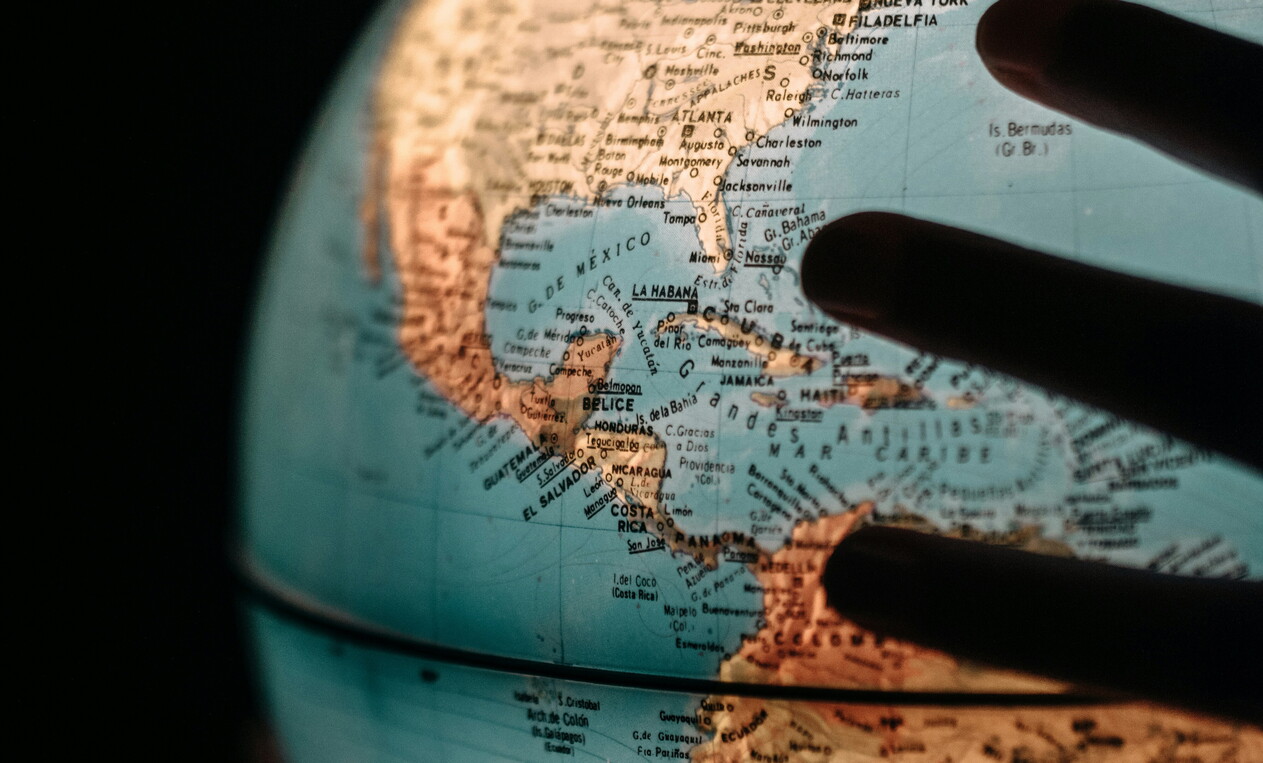
4 minThe geography of power is no longer what it was. The map traces not just national borders, armies and arsenals, but the courses of great rivers, tanker routes, ports, undersea cables and the supply chains that put food on our tables. The geopolitical crises of recent years have upended the old paradigm. The war in Ukraine disrupted global energy and agricultural markets, tensions in the Red Sea exposed the fragility of trade routes, and the closure of the Strait of Hormuz made it clear that a local conflict can have global repercussions. A disruption in gas supplies, a naval blockade or an attack on critical infrastructure moves markets and unsettles political order, fuels inflation, drives migration and tests the resilience of democracies.
A nation's internal security increasingly rests on an integrated system of energy, water and food. These three essential, tightly interlinked resources form the invisible infrastructure of economic and social stability.
This is the logic of the Water-Energy-Food Nexus. Extracting, treating and distributing water takes energy; producing energy takes water; and agriculture depends on both. If a single gear jams, the whole machine slows.
For years we believed that globalization had reduced resources to a purely market question, and that technology offered a near-universal fix. The pandemic first, then the wars, proved otherwise. Security of supply has once again become a pillar of competitiveness. Having the most advanced technology is not enough; energy, raw materials, water and logistics must remain available in times of instability. We have moved from an economy of efficiency—where the winner is whoever produces at the lowest cost—to an economy of resilience.
The technological revolution is no exception. Artificial intelligence, cloud computing, semiconductors and data centers are often heralded as the dawn of an intangible economy. In reality, there is nothing intangible about the digital economy. Every algorithm burns energy; every data center demands enormous quantities of electricity and water for cooling; every tech supply chain runs on critical minerals. Innovation improves efficiency, but it does not solve the resource problem. It transforms it—and makes resources even more central to geopolitical competition.
In 2021, the International Energy Agency (IEA) sketched a scenario in which renewables would power the world by 2050. It is now 2026, and hydrocarbons still meet 80 percent of global energy demand. A $105 trillion economy cannot switch from one system to another overnight. Old and new sources will continue to coexist, adding to both the complexity and the strategic weight of supply security. The geopolitics of energy does not vanish with decarbonization; it changes shape.
The same goes for water. In the Middle East and North Africa—the world's most water-stressed region—dependence on food imports, shared transboundary basins and exposure to energy shocks have made resource management a matter of national security. Yet this is precisely where an important lesson lies. The Gulf states—the United Arab Emirates above all—show that scarcity need not mean vulnerability. Investment in desalination, agricultural innovation, logistics and supply diversification has turned a structural constraint into a competitive advantage.
The Water-Energy-Food Nexus does not merely tell us that water, energy and food are interdependent. It reminds us that security in the 21st century is built by designing systems that can withstand crises and adapt to change.