
An alternative model
The rise of India and the astropolitics of south-south strategic cooperation
India’s space policy reflects a commitment to shaping a model of global governance that is not only efficient and competitive, but also inclusive and development-oriented
11 minIndia’s ascent as a major space power is no longer a story of incremental technological progress; it is a transformation with profound geopolitical and normative implications. While India’s space policy increasingly converges with Western partners, particularly the United States, its broader strategic orientation reflects a distinct effort to shape a more inclusive, development-oriented model of global space governance. In this context, India’s rise is best understood not merely through the lens of capability, but as part of a larger project of South–South strategic cooperation in outer space.
At the foundation of the global space order lies the Outer Space Treaty, which established key principles such as the peaceful use of outer space, non-appropriation of celestial bodies, freedom of access, and state responsibility for national activities. While the treaty remains central to the legal architecture governing space, it is increasingly inadequate in addressing modern technological realities. It does not prohibit the development or use of conventional weapons in space, nor does it regulate anti-satellite capabilities or the growing dominance of NewSpace actors. As a result, the global governance framework is evolving through fragmented and often competing norms relating to sustainability, responsible behavior, and commercialization.
From a lever for development to a foreign policy tool
India’s space policy has evolved within, and in response to, this changing environment. In its early decades, India’s program, led by the Indian Space Research Organisation (ISRO), was deeply rooted in developmental priorities. The emphasis was on atmanirbharta (self-reliance), with space technology serving as a tool for socioeconomic transformation. Satellite systems for communication, meteorology, and remote sensing were deployed to support agriculture, disaster management, and national planning. This approach reflected a broader postcolonial ethos: space was not an arena for prestige or competition, but a means of addressing structural inequalities.
Over time, however, India’s ambitions have expanded. The contemporary phase of India’s space trajectory reflects a shift from a purely development-driven model to one that incorporates strategic, commercial, and security dimensions. Policy reforms introduced in 2020, followed by the Indian Space Policy 2023, mark a decisive turning point. These reforms aim to transition India from a state-centric system to a state-enabled ecosystem, where private actors play a central role in innovation, manufacturing, and launch services. Institutions such as IN-SPACe and NewSpace India Limited embody this transformation, signaling India’s intent to become a key node in the global space economy.
What distinguishes India’s rise is not merely the expansion of its capabilities, but the manner in which those capabilities are being deployed in the international arena. Space has increasingly become an instrument of India’s foreign policy, particularly in its engagement with the Global South. The launch of the South Asia Satellite exemplifies this approach. Conceived as part of India’s “Neighborhood First” policy, the satellite provides communication, tele-education, and disaster-management services to neighboring countries. Beyond its technical utility, the initiative reflects India’s willingness to provide public goods through space cooperation, reinforcing its role as a regional leader.
India’s broader pattern of engagement further underscores this orientation. Over the past decade, it has entered into numerous space cooperation agreements with countries across Asia, Africa, and Latin America. These partnerships focus on capacity building, training, data sharing, and technical assistance, enabling developing countries to utilize space technologies without becoming dependent on external powers. On June 21, 2023, India became the 27th country to sign the Artemis Accords. At the multilateral level, India has also proposed initiatives such as a G20 satellite mission for climate and environmental monitoring, aimed at supporting vulnerable countries through shared data infrastructure.
A bridge between old and new actors
This emerging framework reflects a distinctive model of South–South cooperation in space. Unlike traditional approaches dominated by major powers, India’s strategy emphasizes affordability, accessibility, and developmental relevance. At the same time, it is underpinned by a pragmatic recognition of geopolitical realities. India is not seeking to replace existing power structures, but to position itself as an intermediary—bridging advanced spacefaring nations and emerging space actors.
This balancing act is particularly evident in India’s engagement with competing governance frameworks. Its participation in initiatives such as the Artemis Accords signals a willingness to align with emerging norms shaped by Western powers, particularly in areas such as commercialization and interoperability. However, India remains cautious about fully endorsing governance models that may reinforce asymmetries or exclude the interests of the Global South. Instead, it continues to advocate for the responsible behavior of states, inclusive rulemaking, and equitable access to space resources.
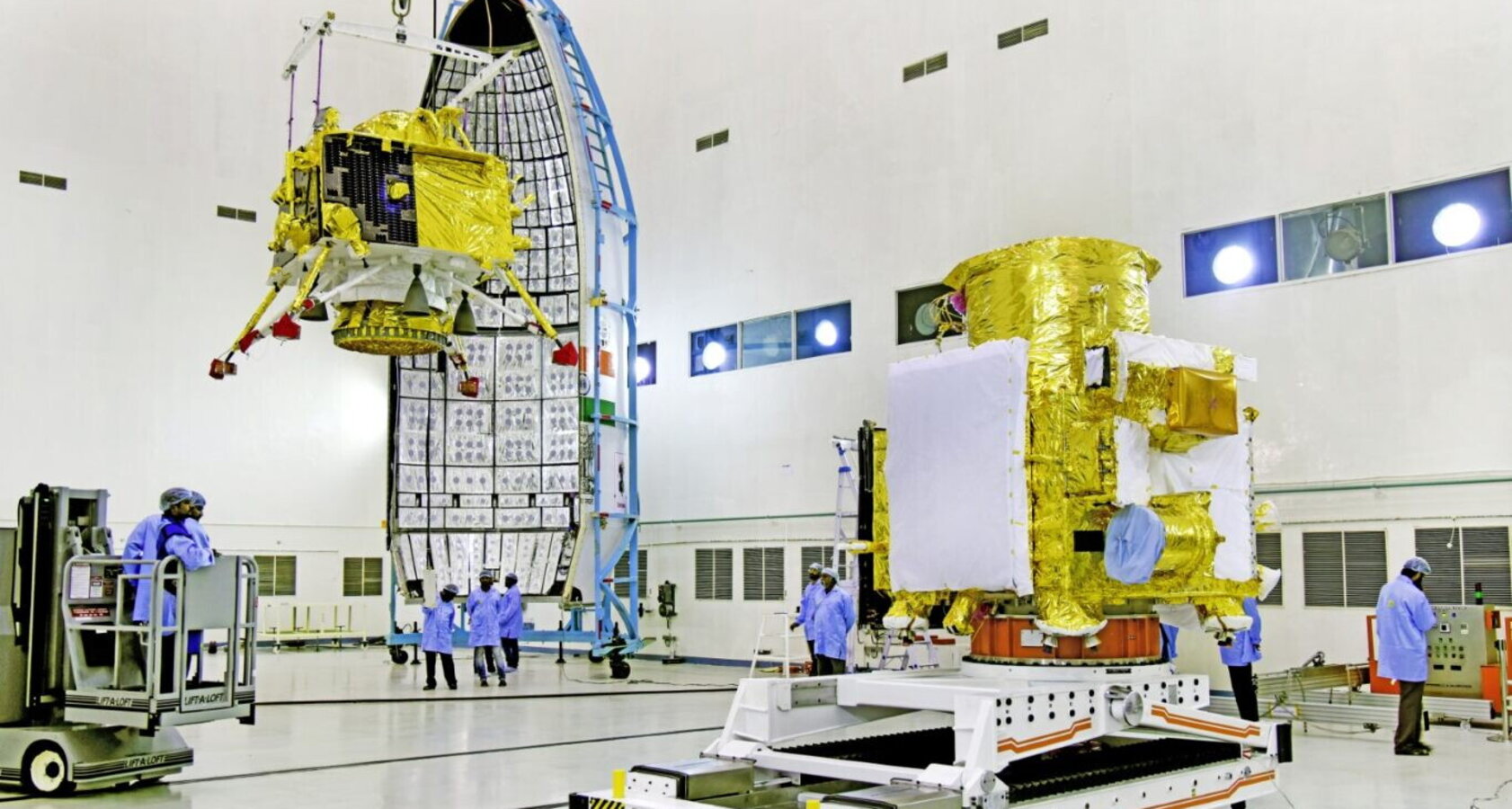
The Vikram lander is a key component of the Indian space program. Developed by ISRO, it is named after Vikram Sarabhai (1919–1971), an Indian physicist and astronomer regarded as the founding father of the national space program. India is the fourth country in the world to have landed on the Moon, following the U.S., Russia, and China.
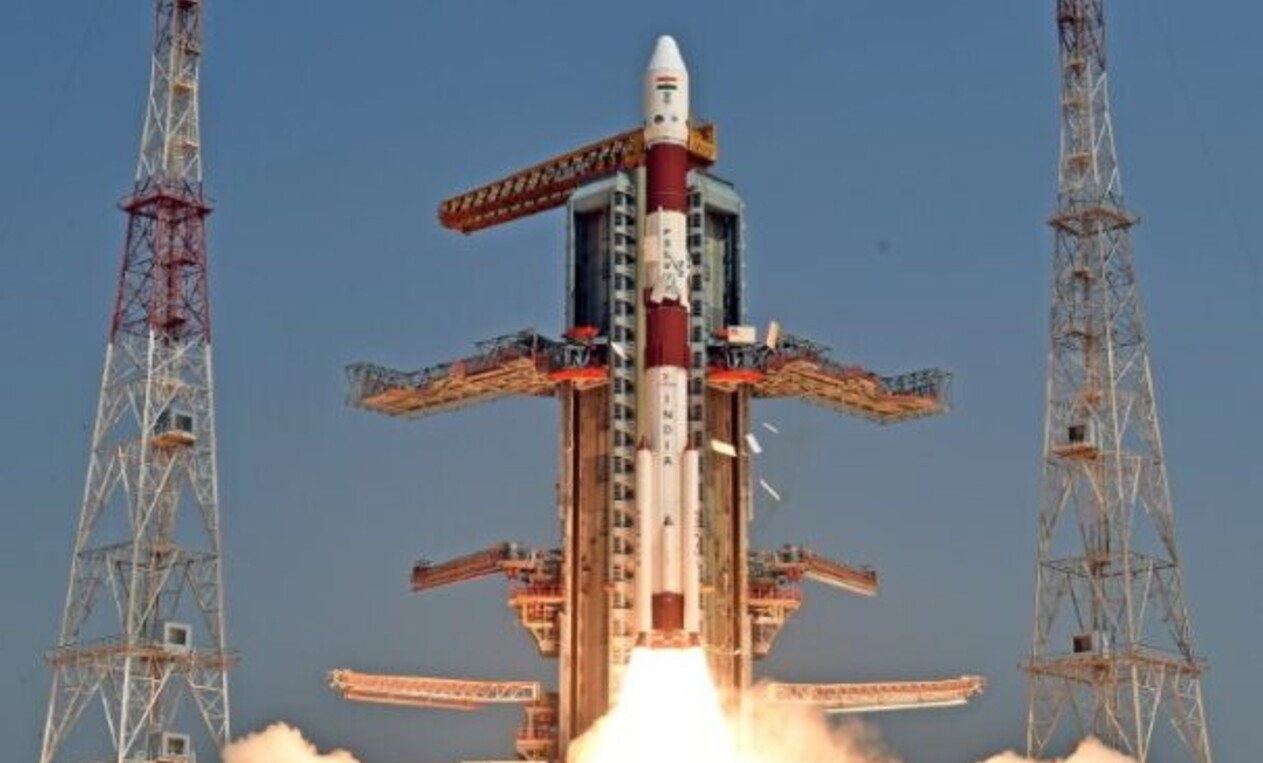
The Satish Dhawan Space Centre (SDSC SHAR) in Sriharikota is India’s main spaceport and one of the flagship centers of the Indian Space Research Organisation. Equipped with world-class infrastructure, it hosts launches for both national and international missions. In 2002, it was named after Satish Dhawan, the historic former chairman of ISRO. The result is a hybrid strategic posture. India simultaneously pursues convergence and autonomy, cooperation and independence. It adopts elements of Western-led governance while preserving the flexibility to engage with a diverse range of partners. In doing so, India is emerging as a “norm-entrepreneur” in space governance, capable of mediating between competing visions of the future space order. Domestically, India’s ambitions are equally expansive; the country is advancing plans for human spaceflight, developing a national space station, and fostering a dynamic commercial space sector. Budgetary allocations and institutional reforms indicate sustained political commitment to these objectives. India is, in effect, attempting to achieve within a decade what many established space powers accomplished over half a century.
At the regional level, South Asia presents a paradoxical landscape where advances in space capabilities coexist with deep-rooted geopolitical tensions. While the region is witnessing notable progress in space exploration, it remains marked by complex political, economic, and military rivalries. The evolving balance of power is shaped by strained relations among India, China, and Pakistan—three nuclear-armed states with a history of conflict. Persistent border disputes continue to fuel strategic mistrust. As India and China consolidate their positions as major space powers, Pakistan, supported by China, has increasingly aligned its strategic posture in response to India. This triangular dynamic gives rise to a security trilemma, in which each state’s pursuit of security intensifies the insecurities of the others.
At the global level, these trends are mirrored by a broader shift toward the securitization of outer space. The establishment of the United States Space Force in 2019 and NATO's recognition of outer space as a distinct operational domain underscore its increasing strategic importance. Defense spending in the space sector has risen significantly, reflecting the dependence of modern military systems on space-based infrastructure for navigation, communication, and surveillance. While space has not yet been directly weaponized in active conflict, the integration of space technologies into military operations raises the possibility that future conflicts may extend beyond traditional domains. As the pace of militarization accelerates, the challenge for the international community lies in preventing the escalation of competition into conflict while preserving space as a domain for peaceful cooperation.
The vacuum of comprehensive national legislation
Beneath the allure of this remarkable ascent lie imperfections that are easy to overlook, yet difficult to ignore. This rapid progress also reveals a critical structural weakness: the absence of a comprehensive national space law and regulations. While policy reforms and regulatory bodies such as IN-SPACe have created a framework for authorisation and oversight, the legal architecture remains fragmented and non-binding. This creates uncertainty for private actors, potentially creating unpredictability for investment and innovation. It also raises questions about India’s ability to meet its international obligations, particularly under the Outer Space Treaty, as the scope and complexity of its space activities expand.
The need for legislative clarity is therefore both urgent and strategic. Law can serve as an instrument of strategic positioning. In an increasingly competitive global space economy, countries that offer predictable and credible regulatory environments are more likely to attract investment, build partnerships, and shape emerging norms. For India, the development of a robust legal framework is not merely a matter of governance; it is central to its aspiration to lead.
India’s space rise must therefore be understood as a multidimensional transformation. It is a story of technological capability, institutional reform, and strategic ambition. But it is also a story of normative innovation, of an attempt to reimagine how space can be governed and utilised in a manner that reflects the interests and aspirations of the Global South.
If India succeeds in aligning its technological advancements with a coherent legal and normative framework, it has the potential to move beyond being a participant in the global space order. It could emerge as one of its principal architects, shaping a model of space governance that is not only efficient and competitive, but also inclusive and equitable. India’s journey in space is not just about reaching new frontiers; it is about redefining them.